
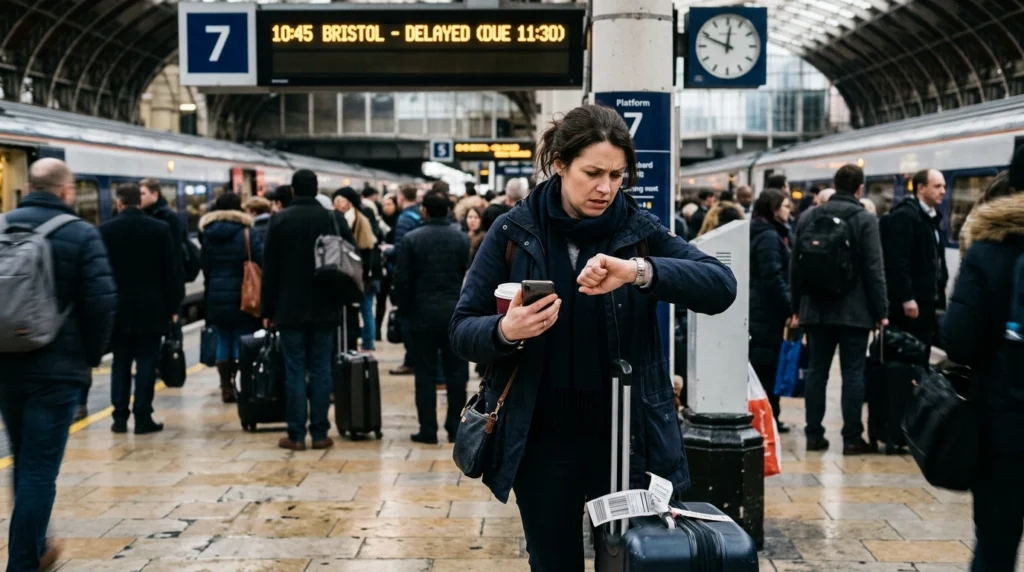
What Is a Metaphor for Impatient?
Simple Definition of an Impatient Metaphor
A metaphor for impatient is a comparison that describes impatience as something else without using “like” or “as.”
For example:
“My patience is a ticking clock.”
This does not mean patience is a real clock. It means the person feels pressure because time seems to be running out.
Why Writers Use Impatience Metaphors
Impatience can be hard to explain because it happens inside the mind. Metaphors give this feeling a visible form.
Writers use impatient metaphors to show:
- The desire for quick results
- Frustration with waiting
- Excitement for something new
- Restlessness and nervous energy
- The struggle to stay calm
The Best Metaphors for Impatient
Impatience Is a Ticking Clock
Meaning of the Metaphor
A ticking clock represents pressure and the feeling that time is moving too slowly.
An impatient person may feel every second passing and struggle to wait.
Example Sentence
“His impatience was a ticking clock, counting every moment until the answer arrived.”
This metaphor shows urgency.
Impatience Is a Racing Engine
Meaning of the Metaphor
A racing engine represents speed and unstoppable energy.
Someone impatient may want to move quickly without slowing down.
Example Sentence
“Her impatience was a racing engine that refused to slow.”
This metaphor shows strong eagerness.
Impatience Is a Boiling Pot
Meaning of the Metaphor
A boiling pot represents pressure building over time.
An impatient person may become frustrated when things do not happen fast enough.
Example Sentence
“His impatience was a boiling pot ready to overflow.”
This metaphor shows growing frustration.
Impatience Is a Caged Bird
Meaning of the Metaphor
A caged bird wants freedom and movement.
This metaphor shows how impatient people may feel trapped while waiting.
Example Sentence
“Her impatience was a caged bird desperate to escape.”
This represents a strong need for action.
Impatience Is a Fire
Meaning of the Metaphor
Fire spreads quickly and burns with energy.
Impatience can create intense feelings that are difficult to control.
Example Sentence
“His impatience was a fire burning through his calm.”
This metaphor shows emotional intensity.
Impatience Is a Storm
Meaning of the Metaphor
A storm represents chaos and strong emotions.
When impatience grows, it can disturb a person’s peace and focus.
Example Sentence
“Her impatience was a storm inside her mind.”
This metaphor shows inner struggle.
Impatience Is a Sprinter at the Starting Line
Meaning of the Metaphor
A sprinter waits for the signal but wants to begin immediately.
This represents excitement and eagerness before something happens.
Example Sentence
“He was a sprinter at the starting line, ready to rush forward.”
This metaphor shows anticipation.
Impatience Is a Loaded Spring
Meaning of the Metaphor
A loaded spring is ready to release energy.
An impatient person may feel ready to act at any moment.
Example Sentence
“His impatience was a loaded spring waiting to explode into action.”
Impatience Is a Hungry Animal
Meaning of the Metaphor
A hungry animal wants satisfaction quickly.
This metaphor shows a strong desire that demands attention.
Example Sentence
“Her impatience was a hungry animal searching for an answer.”
Impatience Is a Fast River
Meaning of the Metaphor
A fast river moves quickly and does not stop.
This represents a person who struggles to slow down and wait.
Example Sentence
“His impatience was a fast river rushing toward the future.”
Comparison Table: Different Metaphors for Impatience
| Metaphor | Meaning | Feeling Shown |
|---|---|---|
| Impatience is a ticking clock | Pressure from waiting | Urgency |
| Impatience is a racing engine | Desire to move quickly | Energy |
| Impatience is a boiling pot | Growing frustration | Anger |
| Impatience is a caged bird | Feeling trapped | Restlessness |
| Impatience is a fire | Strong emotion | Intensity |
| Impatience is a storm | Emotional chaos | Inner struggle |
| Impatience is a loaded spring | Ready to act | Tension |
| Impatience is a fast river | Cannot slow down | Constant movement |

How to Create Your Own Metaphor for Impatient
Think About How Impatience Feels
Ask yourself:
- Does it feel fast?
- Does it feel trapped?
- Does it feel powerful?
- Does it feel uncomfortable?
Your answer can help you find the right image.
Choose an Object With Similar Qualities
Good comparisons include things that represent movement or pressure.
Examples:
- Clock for waiting
- Fire for intensity
- Engine for speed
- Storm for emotion
Connect the Two Ideas
A strong metaphor connects a feeling with a clear image.
Example:
Impatience + Clock
Both create a feeling of time pressure.
Impatience + Fire
Both can grow stronger quickly.
Common Mistakes When Writing Impatient Metaphors
Mistake 1: Using a Weak Image
A weak metaphor does not create a clear picture.
“The impatience was a thing” does not show emotion.
“The impatience was a ticking clock” creates a strong image.
Mistake 2: Confusing Metaphors With Similes
A metaphor says:
“His impatience was a storm.”
A simile says:
“His impatience was like a storm.”
Both compare ideas, but the sentence structure is different.
Mistake 3: Choosing the Wrong Emotion
Impatience usually connects with speed, pressure, or frustration.
A peaceful image may not match the feeling.
“Impatience is a sleeping flower” does not show urgency.
Real-Life Examples of Impatient Metaphors
Example 1
“Waiting for the results was a slow-burning fire of impatience.”
Meaning:
The person became more restless as time passed.
Example 2
“Her impatience was a racing horse trying to break free.”
Meaning:
She wanted to move forward quickly.
Example 3
“His impatience was a storm that ruined his focus.”
Meaning:
His frustration affected his actions.
Example 4
“The deadline was a ticking clock in his mind.”
Meaning:
Time pressure made him anxious.
Example 5
“Her impatience was a wave crashing against her calm.”
Meaning:
Her desire for quick results overcame her patience.
Practice Quiz
Question 1
What does “Impatience is a ticking clock” mean?
A. Time pressure creates urgency
B. A clock feels emotions
C. Waiting is always easy
Answer: A
Question 2
Which metaphor shows growing frustration?
A. Impatience is a boiling pot
B. Impatience is a flower
C. Impatience is a cloud
Answer: A
Question 3
Why do writers use impatience metaphors?
A. To explain emotions clearly
B. To make writing confusing
C. To remove meaning
Answer: A
Question 4
“Impatience is a racing engine” represents:
A. Slowness
B. Speed and energy
C. Peace
Answer: B
Question 5
Which metaphor shows feeling trapped while waiting?
A. Caged bird
B. Rainbow
C. Garden
Answer: A