
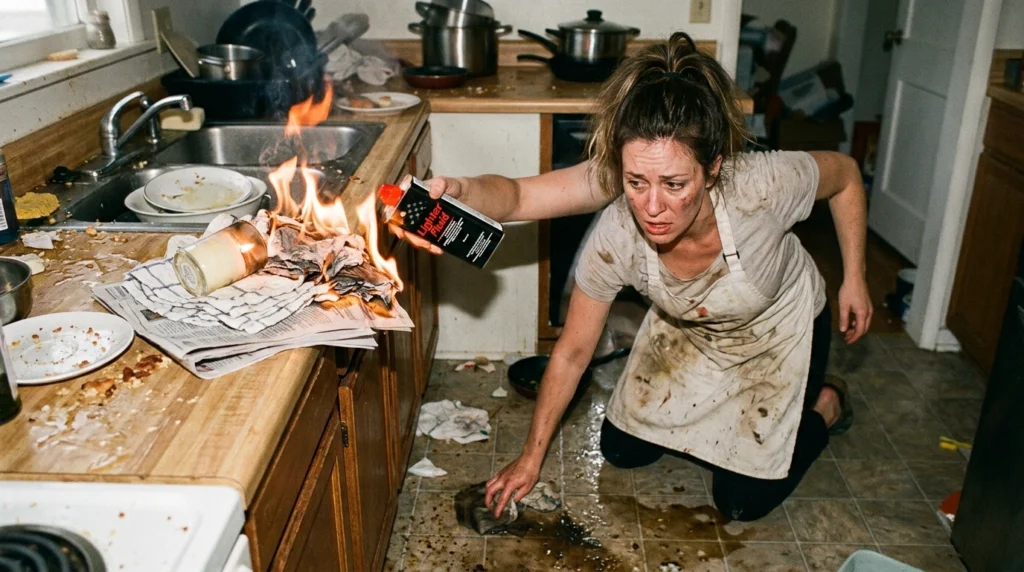
What Is a Metaphor for Making Things Worse?
A metaphor is a figure of speech. It compares two different things without using “like” or “as.”
When you use a metaphor for making things worse, you are describing a situation that is becoming more difficult, painful, or dangerous.
These metaphors are very common in spoken English. They are also used in writing, movies, and news reports.
For example:
“He poured gasoline on the fire when he told his boss the bad news.”
This does not mean someone actually used gasoline. It means he made a tense situation much worse.
Native speakers use these metaphors every day. Learning them will make your English sound more natural and fluent.
Why Do We Need Metaphors for Making Things Worse?
Life is full of problems. Sometimes, problems get bigger. We need words to describe that.
But saying “it got worse” is boring. It is also not very clear.
Metaphors make your language more powerful. They help the listener see the situation in their mind.
For example, imagine you are explaining a bad business decision. You could say:
“The project is failing.”
That is clear. But it is not very strong.
Now try this:
“The project is spiraling out of control.”
Can you feel the difference?
The second example creates a picture in your mind. It is more emotional. It is more memorable.
That is why these metaphors are so important.
The Most Common Metaphors for Making Things Worse
Here are the most popular metaphors used by native English speakers.
1. Pouring Gasoline on the Fire
This is one of the most common metaphors.
Meaning: To make a bad situation much worse.
Example:
“Telling her she was wrong was like pouring gasoline on the fire.”
When to use: Use this when someone says or does something that makes an argument or conflict worse.
2. Adding Fuel to the Fire
This is very similar to the first one.
Meaning: To make a difficult situation even worse.
Example:
“The manager’s angry email just added fuel to the fire.”
When to use: Use this when someone’s action continues or increases a problem.
3. Digging Yourself Into a Deeper Hole
Meaning: Making a problem worse by trying to fix it.
Example:
“Every time he tries to explain, he just digs himself into a deeper hole.”
When to use: Use this when someone keeps making the same mistake.
4. Opening a Can of Worms
Meaning: Creating a new problem or making an old problem more complicated.
Example:
“I thought I could fix it quickly, but I just opened a can of worms.”
When to use: Use this when a simple action leads to many unexpected problems.
5. Snowball Effect
Meaning: A small problem that grows bigger and bigger.
Example:
“My tiny mistake had a snowball effect on the whole team.”
When to use: Use this when a small issue becomes a large disaster.
6. Going from Bad to Worse
Meaning: A situation that continuously gets more difficult.
Example:
“The weather went from bad to worse during our hike.”
When to use: Use this when there is no improvement, only decline.
7. Out of the Frying Pan and Into the Fire
Meaning: Escaping one problem but landing in an even bigger one.
Example:
“He left his old job for a new one, but it was out of the frying pan and into the fire.”
When to use: Use this when a solution creates a new, worse problem.
8. Making a Mountain Out of a Molehill
Meaning: Making a small problem seem much bigger.
Example:
“She is making a mountain out of a molehill over a small mistake.”
When to use: Use this when someone overreacts.
9. Throwing Gasoline on the Flames
This is a variation of the first metaphor.
Meaning: To make a situation worse on purpose or by accident.
Example:
“His rude comments were like throwing gasoline on the flames.”
When to use: Use this in intense emotional situations.
10. Spinning Out of Control
Meaning: When a situation becomes chaotic and unmanageable.
Example:
“The meeting spun out of control after the argument started.”
When to use: Use this when things are happening too fast to stop.
Complete Comparison Table of Metaphors
| Metaphor | Meaning | Example Sentence |
|---|---|---|
| Pouring gasoline on the fire | Making an argument or conflict worse | “Yelling at him was like pouring gasoline on the fire.” |
| Adding fuel to the fire | Continuing to make a problem worse | “Her sarcastic remarks added fuel to the fire.” |
| Digging yourself into a deeper hole | Making your own situation worse | “He keeps digging himself into a deeper hole with his lies.” |
| Opening a can of worms | Creating a new, complicated problem | “I opened a can of worms when I mentioned the budget.” |
| Snowball effect | A small problem growing larger | “One small mistake had a snowball effect on the project.” |
| Going from bad to worse | A continuous decline in a situation | “Our trip went from bad to worse after we missed the flight.” |
| Out of the frying pan and into the fire | Escaping one problem for a bigger one | “She left the job but found herself out of the frying pan and into the fire.” |
| Making a mountain out of a molehill | Overreacting to a small problem | “Please stop making a mountain out of a molehill.” |
| Throwing gasoline on the flames | A specific act that makes a situation worse | “His negative attitude is throwing gasoline on the flames.” |
| Spinning out of control | Becoming chaotic and impossible to manage | “The discussion is spinning out of control.” |
Real-Life Examples (7 Conversations)
Let’s see these metaphors in action. These are realistic conversations you might hear.
Example 1: At Work
Person A: “I tried to explain the delay to the client, but I just made it worse.”
Person B: “How did you do that?”
Person A: “I mentioned the other mistakes. I totally poured gasoline on the fire.”
Lesson: Sometimes, trying to be honest makes a problem bigger.
Example 2: Family Argument
Person A: “Why did you tell mom about my grades?”
Person B: “I thought she would find out anyway.”
Person A: “But now she is angry at both of us. You just added fuel to the fire.”
Lesson: Sharing bad news can sometimes make things worse for everyone.
Example 3: School Project
Person A: “My project is late. I tried to fix it, but now it’s worse.”
Person B: “What happened?”
Person A: “I deleted important files. I am digging myself into a deeper hole.”
Lesson: Mistakes often happen when we panic.
Example 4: Relationship Advice
Person A: “I asked her if she was okay.”
Person B: “That is good. What did she say?”
Person A: “She got angry. Now she is making a mountain out of a molehill.”
Lesson: Sometimes, innocent questions can upset people.
Example 5: At the Office
Person A: “The new software is causing so many problems.”
Person B: “Tell me about it. We fixed one bug, but now there are ten more.”
Person A: “We opened a can of worms with this update.”
Lesson: Technology problems often grow bigger.
Example 6: Travel Experience
Person A: “Our hotel lost our reservation.”
Person B: “That is terrible. What did you do?”
Person A: “We found a new hotel, but it was dirty. We went out of the frying pan and into the fire.”
Lesson: Travel plans can easily go wrong.
Example 7: Financial Troubles
Person A: “I missed one payment.”
Person B: “What happened next?”
Person A: “The fees increased. Then my credit score dropped. It was a snowball effect.”
Lesson: Financial problems often grow quickly.

When Should You Use These Metaphors?
You can use these metaphors in many situations. Here are some common scenarios.
At Work
During meetings to describe a failing project.
In emails to explain a difficult situation.
When giving negative feedback to a colleague.
To warn your team about potential problems.
Example:
“If we do not fix this issue, it will spin out of control.”
In Conversations with Friends
When sharing personal problems.
When listening to a friend’s story.
When giving advice.
When complaining about daily life.
Example:
“I told him the truth, and it added fuel to the fire.”
In Writing
In essays to create vivid descriptions.
In stories to build drama.
In blogs to connect with readers.
In social media posts to express frustration.
Example:
“The argument was like gasoline on a fire.”
In Business Communication
In reports to describe risks.
In presentations to explain challenges.
In customer service to apologize.
In team meetings to create urgency.
Example:
“Our mistakes had a snowball effect on sales.”
Common Mistakes to Avoid
Even advanced learners make mistakes with metaphors. Here is what to avoid.
Mistake 1: Mixing Metaphors
Incorrect:
“He poured gasoline on the fire and dug a hole.”
Correct:
“He poured gasoline on the fire.”
Explanation: Stick to one metaphor at a time. Mixing them confuses people.
Mistake 2: Using the Wrong Metaphor
Incorrect:
“My small mistake was a mountain out of a molehill.” (This means overreacting, not the mistake itself.)
Correct:
“She made a mountain out of a molehill.”
Explanation: Use the metaphor for the action, not the problem.
Mistake 3: Overusing Metaphors
Incorrect:
“The project is a fire, a can of worms, and a hole all at once.”
Correct:
“The project is spinning out of control.”
Explanation: One powerful metaphor is better than many weak ones.
Mistake 4: Taking Metaphors Literally
Incorrect:
“Do we need to buy gasoline?”
Correct:
“He was just using a metaphor.”
Explanation: Remember, these are not literal instructions.
Mistake 5: Using Metaphors in Formal Situations
Incorrect:
“Our financial report is a can of worms.”
Better:
“Our financial report has several unexpected issues.”
Explanation: Some metaphors are too informal for business writing.
Quick Memory Trick
Here is an easy way to remember these metaphors.
Think of a campfire.
If you add gasoline, the fire gets bigger. = Making a problem worse.
If you add fuel, the fire stays big. = Continuing a problem.
Now think of a snowball.
If you roll it down a hill, it gets bigger. = Snowball effect.
Finally, think of a mountain.
If you make a small hill look like a big mountain, you are overreacting. = Mountain out of a molehill.
Use these images to remember the meanings.
Practice Quiz (Interactive Section)
Test your knowledge. Choose the correct metaphor for each sentence.
Question 1:
“He kept arguing with the police officer. He was _____.”
A) Opening a can of worms
B) Digging himself into a deeper hole
C) Making a mountain out of a molehill
Answer: B) Digging himself into a deeper hole.
Question 2:
“I asked one simple question, and now we have 100 new problems. I _____.”
A) Added fuel to the fire
B) Opened a can of worms
C) Spun out of control
Answer: B) Opened a can of worms.
Question 3:
“She is crying over a small scratch on her car. She is _____.”
A) Pouring gasoline on the fire
B) Making a mountain out of a molehill
C) Throwing gasoline on the flames
Answer: B) Making a mountain out of a molehill.
Question 4:
“We escaped the flood, but then our house caught fire. We went _____.”
A) From bad to worse
B) Out of the frying pan and into the fire
C) Spinning out of control
Answer: B) Out of the frying pan and into the fire.
Question 5:
“One late payment led to fees, then a credit score drop, then a loan denial. It was a _____.”
A) Snowball effect
B) Can of worms
C) Molehill
Answer: A) Snowball effect.