
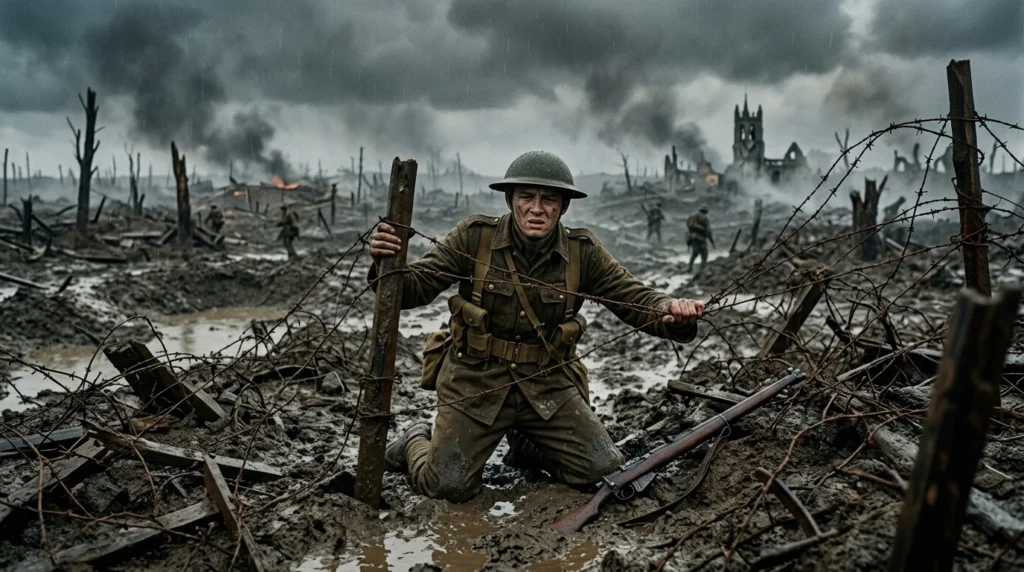
What Is a Metaphor for World War 1?
A metaphor for World War 1 is a figure of speech that compares the war to another image or concept to emphasize its scale, destruction, or lasting impact.
Rather than describing battles literally, these metaphors express ideas such as widespread conflict, sacrifice, political tension, or historical change.
Examples
- World War 1 was a powder keg waiting to explode.
- The war became a global storm.
- Europe was a house on fire.
These expressions are symbolic rather than literal.
What Does World War 1 Symbolize?
In history and literature, World War 1 often symbolizes:
- Global conflict
- Human sacrifice
- Political tension
- Nationalism
- Destruction
- Rapid change
- Loss
- Courage
- The cost of war
- A turning point in history
The meaning depends on the historical or literary context.
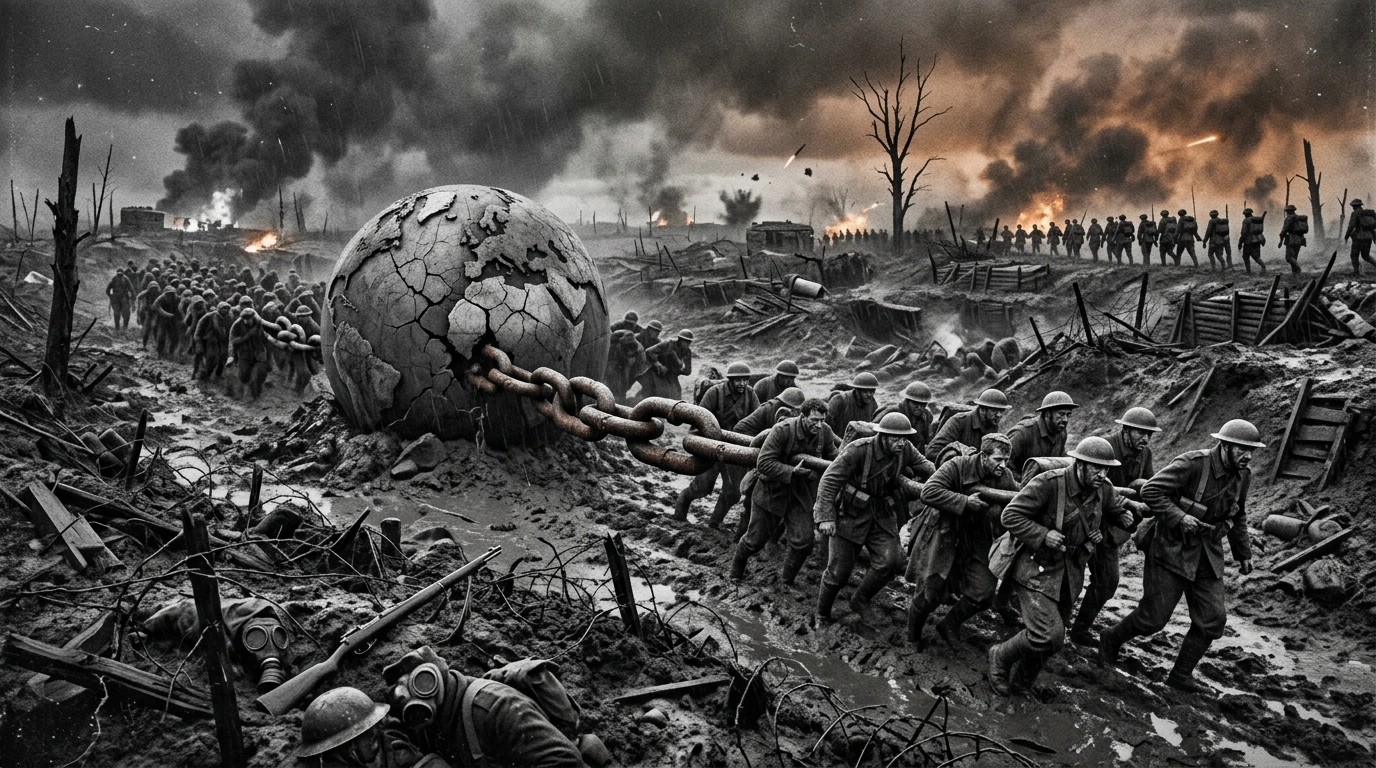
Best Metaphors for World War 1
| Metaphor | Meaning | Example |
|---|---|---|
| Powder keg | Growing tension ready to explode | Europe was a powder keg before the war. |
| Global storm | Widespread destruction | The conflict became a global storm. |
| House on fire | A crisis spreading quickly | Europe was a house on fire. |
| Domino chain | One event triggering another | Alliances formed a domino chain. |
| Earthquake | A massive event that reshaped history | The war was an earthquake in world politics. |
| Broken bridge | Collapse of peace between nations | Diplomacy became a broken bridge. |
| Iron furnace | Intense suffering and hardship | Soldiers entered an iron furnace. |
| Dark cloud | Fear and uncertainty | A dark cloud settled over Europe. |
| Tidal wave | Overwhelming force | The conflict swept across nations like a tidal wave. |
| Scars on the world | Lasting effects of the war | The war left scars on the world. |
Each metaphor highlights a different aspect of the conflict, from its causes to its long-term consequences.
Metaphor for World War 1 vs Simile
Metaphors and similes both compare ideas, but they are structured differently.
| Feature | Metaphor | Simile |
| Direct comparison | ✅ Yes | ❌ No |
| Uses “like” or “as” | ❌ No | ✅ Yes |
| Example | Europe was a powder keg. | Europe was like a powder keg. |
| Effect | Strong and vivid | More direct |
A metaphor states that one thing is another. A simile compares using like or as.
Real-Life Examples
Conversation 1
Person A: Why did the war begin so suddenly?
Person B: Europe was a powder keg.
Lesson: The metaphor shows that tensions had been building for years.
Conversation 2
Person A: How did the war affect the world?
Person B: It became a global storm.
Lesson: The metaphor emphasizes widespread destruction.
Conversation 3
Person A: Why did so many countries join?
Person B: Alliances were a domino chain.
Lesson: One event led to many others.
Conversation 4
Person A: Why was diplomacy unsuccessful?
Person B: Peace became a broken bridge.
Lesson: The metaphor represents failed negotiations.
Conversation 5
Person A: How difficult were the battles?
Person B: Soldiers entered an iron furnace.
Lesson: The metaphor expresses extreme hardship.
Conversation 6
Person A: What was the atmosphere before the war?
Person B: A dark cloud hung over Europe.
Lesson: The metaphor suggests fear and uncertainty.
Conversation 7
Person A: Did the war have lasting effects?
Person B: It left scars on the world.
Lesson: The metaphor highlights long-term consequences.
When Should You Use a Metaphor for World War 1?
World War 1 metaphors help explain complex historical ideas in an engaging way.
Use them in:
- History essays
- Literature analysis
- Classroom presentations
- Speeches
- Research papers
- Historical fiction
- Blog posts
- Educational materials
- Creative writing
- Discussions about global history
Choose a metaphor that matches the specific point you want to make.
Common Mistakes
Incorrect
The war literally became a storm.
Correct
The war was a global storm.
Explanation: The comparison is figurative.
Incorrect
Europe exploded because it was a powder keg.
Correct
Europe was a powder keg of political tension.
Explanation: Clarify the symbolic meaning.
Incorrect
History became an earthquake.
Correct
The war was an earthquake in history.
Explanation: The metaphor refers to massive change.
Incorrect
Peace was a road.
Correct
Peace became a broken bridge.
Explanation: The bridge symbolizes lost connections.
Incorrect
The war was a wave because of water.
Correct
The conflict became a tidal wave.
Explanation: The wave represents overwhelming force.
Incorrect
Countries were dominoes.
Correct
The alliance system became a domino chain.
Explanation: The metaphor focuses on cause and effect.
Incorrect
The world had real scars.
Correct
The war left scars on the world.
Explanation: The scars represent lasting consequences.
Quick Memory Trick
Think of this phrase:
World War 1 spread quickly and changed the world forever.
Remember these easy metaphors:
- Powder keg = rising tension
- Global storm = widespread conflict
- Domino chain = chain reaction
- Broken bridge = failed peace
- Scars on the world = lasting impact
Picture each image to remember its meaning.
Practice Quiz
1. Which metaphor best describes rising political tension?
A. Powder keg
B. Quiet lake
C. Open field
D. Soft pillow
Answer: A
2. Which metaphor represents widespread destruction?
A. Global storm
B. Small candle
C. Flower garden
D. Gentle breeze
Answer: A
3. Which metaphor explains how one event triggered many others?
A. Domino chain
B. Brick wall
C. Empty box
D. Paper airplane
Answer: A
4. Which metaphor symbolizes failed diplomacy?
A. Broken bridge
B. Strong ladder
C. Tall tower
D. Bright window
Answer: A
5. Why do writers use World War 1 metaphors?
A. To explain complex historical ideas with vivid images
B. To replace historical facts
C. To make essays longer
D. To avoid studying history
Answer: A