
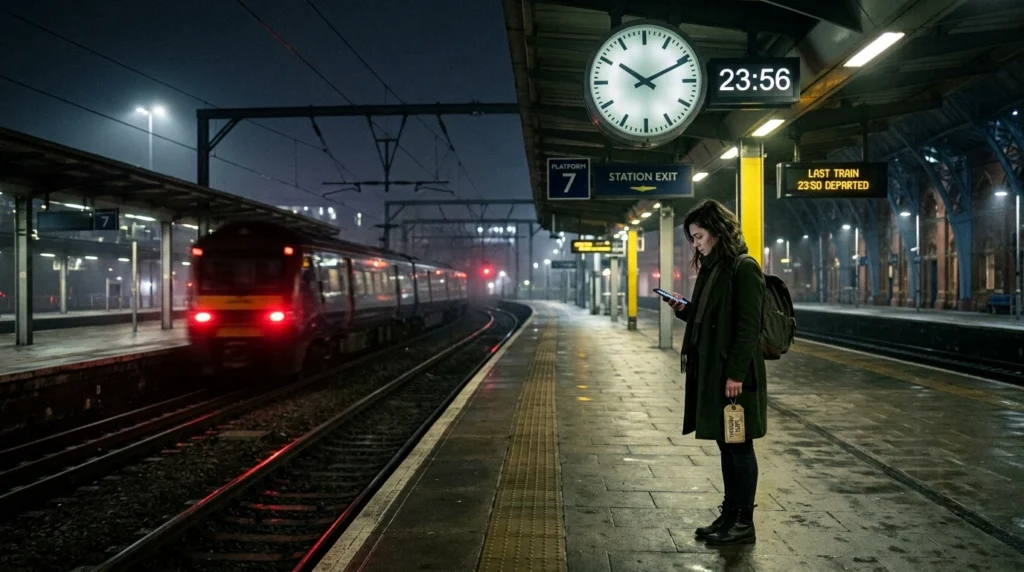
What Is a Metaphor for Late?
A metaphor for late is a creative comparison that describes delay or missing time using symbolic images instead of direct words.
It shows that time has moved ahead while someone is still behind.
For example:
- “I was a missed train on the platform of time.”
- “His arrival was a fading echo of the moment.”
These expressions help show delay in a more emotional and visual way.
Why Do Writers Use Metaphors for Late?
Writers use these metaphors because they:
- Show delay in a creative way
- Make time-related writing more visual
- Express stress or urgency
- Improve storytelling quality
- Help readers imagine situations clearly
- Add emotional depth to simple actions
Being late is not just about time—it can also show pressure and missed opportunities.
Comparison Table Metaphor for Late
| Metaphor | Meaning | Emotion Type | Example |
|---|---|---|---|
| Missed train | Lost opportunity | Regret | He was a missed train |
| Running clock | Time moving faster | Stress | Life felt like a running clock |
| Fading echo | Too late arrival | Loss | Her voice was a fading echo |
| Broken time path | Delay in life | Confusion | His journey was a broken time path |
| Slipping shadow | Missing moment | Urgency | He was a slipping shadow |

Powerful Metaphors for Late
Missed Train
A lost opportunity due to delay.
He felt like a missed train on the platform.
Running Clock
Time moving faster than expected.
Life became a running clock for him.
Fading Echo
Something arriving too late to matter.
Her answer was a fading echo.
Slipping Shadow
Missing the right moment.
He was a slipping shadow in time.
Broken Time Path
A disrupted schedule or delay.
His day became a broken time path.
Lost Minute
A moment that cannot be recovered.
It felt like a lost minute in history.
Closing Door
Opportunity ending due to delay.
The meeting was a closing door.
Vanishing Moment
A missed chance.
He arrived like a vanishing moment.
Delayed Sunrise
Something happening too late.
Her help was a delayed sunrise.
Out of Sync Clock
Not matching time or schedule.
He was an out of sync clock.
Missed Beat
Missing the right timing.
Her speech was a missed beat.
Delayed Wave
Late reaction or arrival.
His response was a delayed wave.
Running Shadow
Trying to catch up with time.
He was a running shadow.
Late Spark
A reaction that comes too late.
It was a late spark of effort.
Empty Platform
Missing arrival at the right time.
He stood on an empty platform.
Broken Alarm
Failure to respond on time.
His morning was a broken alarm.
Fading Opportunity
A chance disappearing due to delay.
It became a fading opportunity.
Missed Horizon
Missing future possibilities.
He saw a missed horizon.
Slow Falling Leaf
Late movement in time.
She was a slow falling leaf.
Clock Without Hands
No sense of timing.
His life felt like a clock without hands.
When to Use These Metaphors
You can use them in:
- Story writing
- Essays
- Daily English conversations
- Speech writing
- Emotional descriptions
- Creative assignments
- Time-related explanations
They help show delay in a more expressive way.
Common Mistakes
- Mixing time metaphors too much
- Using overly complex images
- Forgetting the meaning of “late”
- Writing unclear comparisons
- Repeating the same idea
- Using literal instead of emotional meaning
- Overloading one sentence with metaphors
Quick Memory Trick
Think like this:
- Late = time moved ahead
- You = behind time
- Feeling = missed moment
Simple rule:
Late = missed timing + lost moment
Practice Quiz
What does “missed train” mean?
A) Fast arrival
B) Lost opportunity
C) Happy moment
D) Early success
Answer: B
What does “fading echo” represent?
A) Loud sound
B) Late response
C) Bright idea
D) Speed
Answer: B
What does “broken time path” show?
A) Clear schedule
B) Delay or confusion
C) Success
D) Silence
Answer: B
What does “closing door” mean?
A) New start
B) Opportunity ending
C) Open chance
D) Light
Answer: B
What does “out of sync clock” represent?
A) Perfect timing
B) Wrong timing
C) Fast speed
D) Growth
Answer: B