
What Is a River Metaphor for Life?
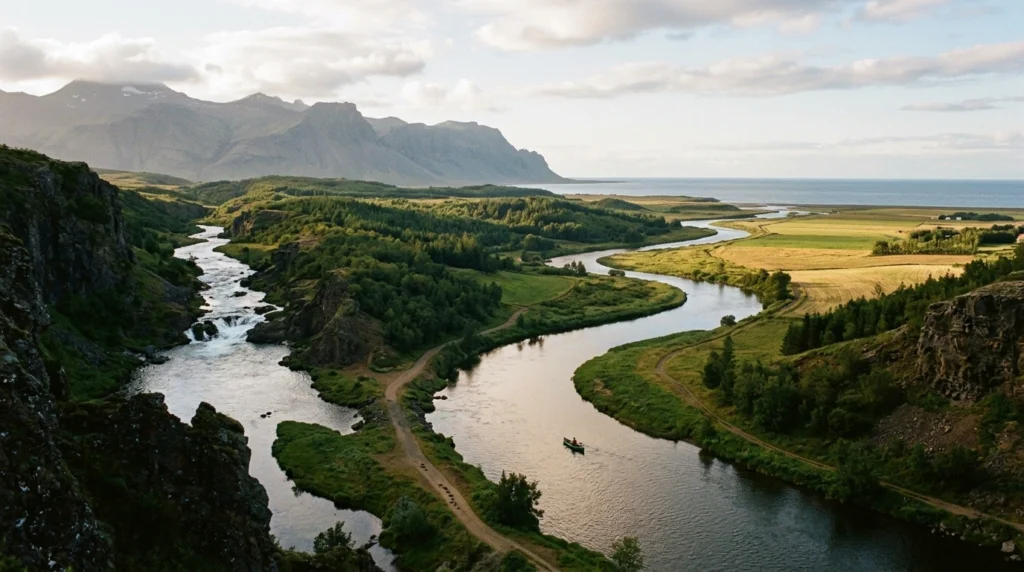
A river metaphor for life compares life to a flowing river. Instead of describing life directly, it uses the image of a river to show how people grow, change, and move forward.
Just as a river begins as a small stream and eventually reaches the sea, every person’s life starts with childhood and continues through different stages.
The comparison reminds us that life is always moving. We cannot stop time, but we can learn to navigate each new experience.
Why Is a River a Powerful Symbol?
Rivers exist in almost every part of the world, making them familiar to nearly everyone.
Because rivers constantly flow, they naturally represent movement, change, hope, and the passage of time.
Many cultures also see rivers as symbols of wisdom, renewal, and transformation.
Why Writers Use the River Metaphor for Life
Writers use the river metaphor for life because it turns complex ideas into simple, memorable images. Readers can easily picture a flowing river, making the message more emotional and easier to understand.
Instead of saying life changes constantly, a writer can simply describe life as a river that never stops flowing.
This type of metaphor also encourages readers to reflect on their own experiences.
Emotional Connection
The image of a river often creates feelings of peace, hope, and acceptance.
Readers naturally connect flowing water with movement and growth.
Easy to Understand
Even young readers understand how rivers work.
That makes this metaphor suitable for students, teachers, and English learners.
What Does the River Represent in Life?
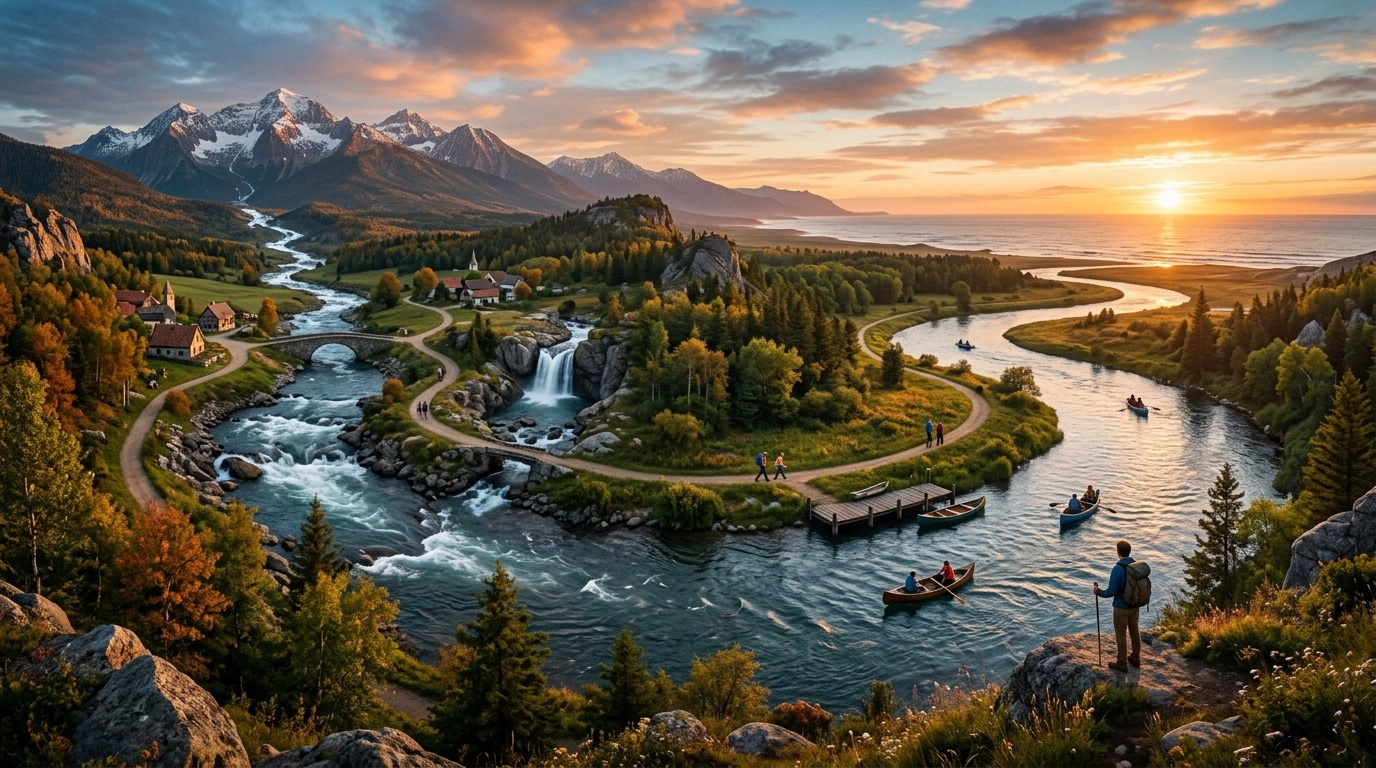
A river contains many different parts, and each one can represent a different stage or experience in life.
The Source Represents Birth
Every river begins with a small spring or stream.
Likewise, every person’s journey begins at birth.
This starting point symbolizes new beginnings and endless possibilities.
The Flow Represents Time
A river never stands still.
Time also continues moving, whether we are ready or not.
This reminds us to value every moment.
The Curves Represent Life’s Changes
Few rivers flow in perfectly straight lines.
They twist and turn around mountains, forests, and valleys.
Life follows the same pattern through unexpected opportunities and challenges.
The Rocks Represent Obstacles
Large rocks slow a river but rarely stop it.
In life, problems, failures, and disappointments may delay us, yet they also make us stronger.
Every obstacle teaches valuable lessons.
The Tributaries Represent Relationships
Small rivers join larger rivers along the journey.
These streams can represent family members, friends, teachers, mentors, and everyone who influences our lives.
Each relationship helps shape who we become.
The Water Represents Growth
Fresh water constantly replaces old water.
People also continue learning, changing, and improving throughout life.
Growth never truly ends.
The Ocean Represents Life’s Destination
Eventually, every river reaches the sea.
Many writers use this image to represent fulfillment, peace, wisdom, or the completion of life’s journey.
Different cultures interpret this destination in different ways.
Best River Metaphors for Life
Different river metaphors highlight different parts of life’s journey.
Life Is a Flowing River
This is the most common metaphor.
It reminds us that life keeps moving, even when we wish time would slow down.
Example:
“Life is a flowing river that carries us toward new experiences.”
Life Is a Winding River
A winding river changes direction many times.
This metaphor reminds us that unexpected turns often lead to personal growth.
Example:
“My career became a winding river filled with surprising opportunities.”
Life Is a River After the Rain
Heavy rain makes rivers stronger and faster.
Likewise, difficult experiences often help people become more resilient.
Example:
“After every setback, life became a river after the rain, stronger than before.”
Life Is a Quiet River
Sometimes rivers flow gently.
This metaphor represents peaceful moments, balance, and contentment.
Example:
“Retirement felt like a quiet river flowing through a beautiful valley.”
Life Is a Wild River
Fast-moving rivers contain excitement and uncertainty.
This metaphor describes adventurous or unpredictable periods.
Example:
“Starting my own business felt like entering a wild river.”
Life Is a River That Finds a Way
Water naturally moves around every obstacle.
People also discover new paths when challenges appear.
Example:
“Even after losing his job, he proved that life is a river that always finds a way.”
River Metaphor for Life vs. Other Life Metaphors
| Metaphor | Main Meaning | Best Used For |
|---|---|---|
| River | Change, growth, movement | Personal development |
| Road | Choices and direction | Decision-making |
| Journey | Long-term experiences | Life stages |
| Mountain | Challenges and achievement | Success through effort |
| Garden | Care and personal growth | Self-improvement |
| Tree | Strength and stability | Family and wisdom |
| Ocean | Mystery and endless possibilities | Big dreams |
The river metaphor for life stands out because it combines movement, change, resilience, and hope into one simple image. Unlike a road, a river adapts naturally to every obstacle without giving up.
Real-Life Examples of the River Metaphor for Life
Example 1
Person A: Everything keeps changing in my life.
Person B: That’s because life is a river—it never stops flowing.
Lesson: Change is a natural part of life.
Example 2
Person A: I didn’t expect my career to take this direction.
Person B: Rivers don’t flow in straight lines either.
Lesson: Unexpected turns often lead to growth.
Example 3
Person A: I failed my exam.
Person B: Even rivers slow down when they meet rocks.
Lesson: Obstacles are temporary.
Example 4
Person A: I’m afraid of starting over.
Person B: Every river begins as a tiny stream.
Lesson: Great journeys start with small steps.
Example 5
Person A: I keep worrying about the future.
Person B: A river reaches the sea one mile at a time.
Lesson: Focus on today’s progress instead of tomorrow’s worries.
Example 6
Person A: I feel stronger after everything I’ve been through.
Person B: Fast water shapes the strongest rivers.
Lesson: Challenges build resilience.
Example 7
Person A: My family has supported me through every stage of life.
Person B: They are the streams that joined your river.
Lesson: Relationships shape our journey.
When Should You Use a River Metaphor for Life?
A river metaphor for life works well whenever you want to explain change, growth, hope, or the journey of living. It makes ideas easier to understand because most people can picture a river flowing toward its destination.
In Essays
Students often use this metaphor to explain personal growth or life lessons.
Example:
“Life is a river that teaches us something new at every bend.”
This sentence adds emotion and creativity without making the writing difficult to read.
In Speeches
A river metaphor can inspire listeners and make a speech more memorable.
Example:
“Like a river, we must keep moving forward even when obstacles stand in our way.”
The image encourages people to stay hopeful and determined.
In Poetry
Poets use rivers to express emotions, memories, and the passage of time.
Example:
“My dreams floated down the river of tomorrow.”
This creates a peaceful and imaginative picture for the reader.
In Personal Journals
Writing about your experiences becomes more meaningful when you compare life to a river.
Example:
“This year felt like a fast-moving river, full of surprises and lessons.”
It helps you reflect on how far you have come.
In Motivational Writing
The river metaphor reminds readers that setbacks are only part of the journey.
Example:
“A river never quits because of one rock, and neither should you.”
This simple comparison offers encouragement without using complicated words.
In Everyday Conversations
People often use river metaphors to comfort or encourage friends.
Example:
“Don’t worry. Life is a river, and this difficult moment will pass.”
The metaphor makes advice feel gentle and hopeful.
Common Mistakes When Using a River Metaphor for Life
Although the river metaphor for life is simple, learners sometimes use it incorrectly. Here are common mistakes to avoid.
Mistake 1: Treating the River as Still
Incorrect:
“Life is a frozen river that never changes.”
Correct:
“Life is a flowing river that is always changing.”
Explanation:
The main idea of this metaphor is movement and change.
Mistake 2: Forgetting the Meaning
Incorrect:
“Life is a river because rivers are blue.”
Correct:
“Life is a river because it keeps moving forward.”
Explanation:
Focus on the symbolic meaning instead of physical details.
Mistake 3: Mixing Unrelated Metaphors
Incorrect:
“Life is a river climbing a mountain.”
Correct:
“Life is a river flowing around mountains.”
Explanation:
Keep one clear image throughout your sentence.
Mistake 4: Making the Metaphor Too Complicated
Incorrect:
“Life is an infinitely expanding hydraulic ecosystem of emotional currents.”
Correct:
“Life is a river that teaches us to adapt.”
Explanation:
Simple metaphors are easier to understand and remember.
Mistake 5: Using It Without Context
Incorrect:
“Life is a river.”
Correct:
“Life is a river because every twist and turn helps us grow.”
Explanation:
Adding a short explanation makes the metaphor more meaningful.
Mistake 6: Thinking Every River Means the Same Thing
Different rivers can represent different ideas.
A calm river may symbolize peace, while a rushing river can represent excitement or challenges.
Always match the metaphor to your message.
Mistake 7: Overusing the Metaphor
Repeating the same metaphor many times can make writing feel repetitive.
Instead, combine it with fresh descriptions and examples to keep your readers interested.
Quick Memory Trick
Remember this easy phrase:
River = Life in Motion
Think about these simple connections:
- Source = Birth
- Flow = Time
- Curves = Life’s Changes
- Rocks = Challenges
- Bridges = Opportunities
- Tributaries = Relationships
- Ocean = Destination
A simple sentence to remember is:
“A river keeps flowing, and so does life.”
Whenever you see a river, remind yourself that progress is more important than perfection.
Practice Quiz
Test your understanding of the river metaphor for life.
Question 1
What does a flowing river usually represent?
A. Stopping
B. Growth and change
C. Fear
D. Silence
Answer: B. Growth and change
Question 2
In the river metaphor, what do rocks often symbolize?
A. Happiness
B. Obstacles
C. Friendship
D. Success
Answer: B. Obstacles
Question 3
What does the source of a river represent?
A. Retirement
B. Birth or a new beginning
C. Failure
D. The future
Answer: B. Birth or a new beginning
Question 4
Which sentence correctly uses the river metaphor?
A. Life is a river that keeps flowing forward.
B. Life is a river that never moves.
C. Life is a river because rivers are wet.
D. Life is exactly the same every day.
Answer: A. Life is a river that keeps flowing forward.
Question 5
Why is the river metaphor effective?
A. It makes ideas harder to understand.
B. It creates a clear picture of change and growth.
C. It only works in poetry.
D. It has only one meaning.
Answer: B. It creates a clear picture of change and growth.