
What Is a Metaphor for a Cell?
A metaphor is a figure of speech that compares two different things without using words such as like or as. Instead of explaining a cell with scientific terms, it compares the cell to something people already understand.
For example:
- A cell is a factory.
- A cell is a city.
- A cell is a busy kitchen.
Each comparison highlights how different parts of the cell work together to keep it alive.
Why Use Metaphors to Explain a Cell?
Cells contain many tiny structures that can seem confusing at first. Metaphors simplify these ideas by comparing them to everyday places and objects.
They are useful for:
- Biology lessons
- School assignments
- Classroom presentations
- Science projects
- ESL learners
- Beginner students
A good metaphor also makes scientific ideas easier to remember.
Metaphor for a Cell vs. Scientific Explanation
| Feature | Metaphor | Scientific Explanation |
|---|---|---|
| Purpose | Makes learning simple and visual | Explains biological facts |
| Example | A cell is a factory. | A cell is the basic unit of life. |
| Style | Creative | Technical |
| Best For | Beginners and students | Biology classes and research |
| Reader Benefit | Easy to imagine | Scientifically detailed |
Summary: A scientific explanation tells you what a cell is, while a metaphor helps you visualize how it works. Using both together creates a better understanding.
Best Metaphors for a Cell
A Factory
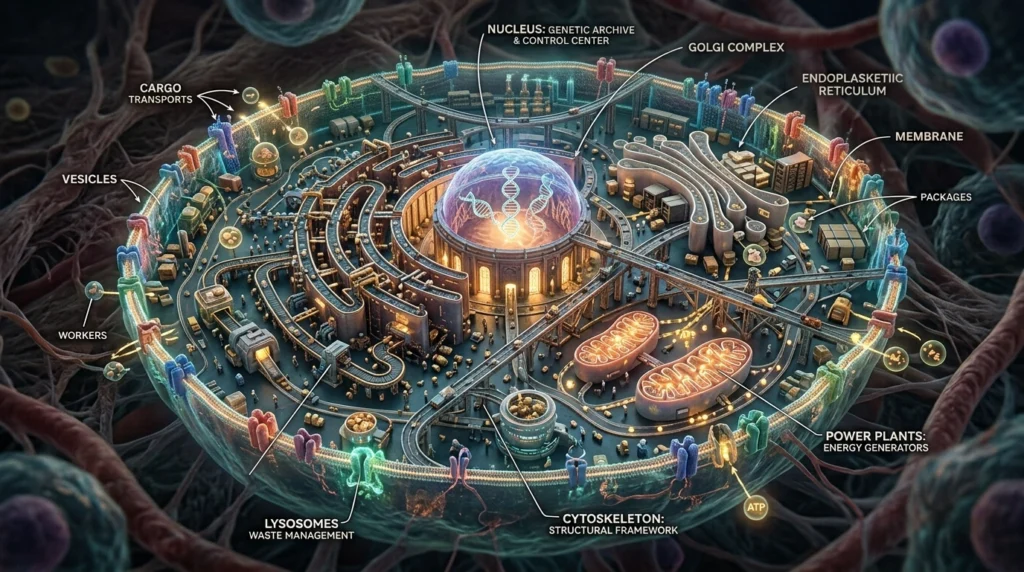
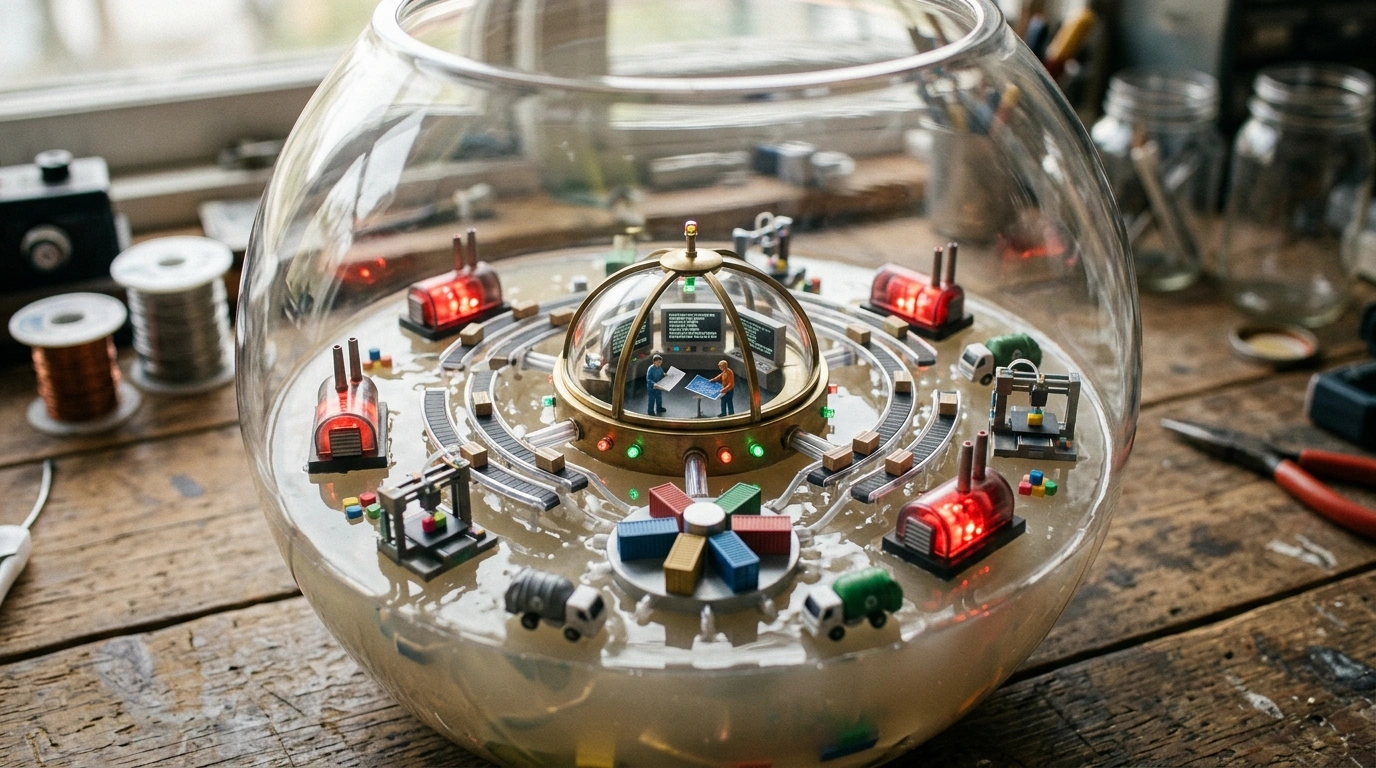
One of the most common metaphors is that a cell is a factory. Every organelle has a specific job, just like workers and machines inside a factory.
Example:
A cell is a factory where every part works together to produce energy and keep life running.
A City
A city has roads, buildings, workers, power stations, and security. A cell functions in a similar way because every organelle has its own responsibility.
Example:
The cell is a busy city filled with workers and transportation systems.
A School
Just as teachers, students, and staff each have different duties, every part of the cell performs a unique task.
Example:
A cell is a well-organized school where everyone has an important role.
A Kitchen
A kitchen takes ingredients and turns them into meals. Cells also process nutrients and create energy.
Example:
The cell is a kitchen preparing everything needed for life.
A Power Plant
Cells generate energy through their mitochondria, making this comparison easy to understand.
Example:
A cell is a power plant that keeps the body running.
A Tiny Universe
Even though a cell is microscopic, it contains many parts working together in harmony.
Example:
Every cell is a tiny universe full of activity.
A Machine
Machines depend on many moving parts. Cells also rely on organelles working together efficiently.
Example:
A healthy cell is a perfectly designed machine.
A Team
Every player contributes to winning a game. Likewise, every organelle contributes to keeping the cell alive.
Example:
A cell is a championship team where every member matters.
A Library
DNA stores genetic information just as books store knowledge.
Example:
A cell is a library filled with instructions for life.
A Small Community
Every part supports the others, creating a balanced living system.
Example:
A cell is a peaceful community where cooperation keeps everything working.
Popular Cell Metaphors and What They Represent
| Metaphor | Represents |
|---|---|
| Factory | Organization and production |
| City | Cooperation between organelles |
| School | Teamwork and responsibility |
| Kitchen | Processing nutrients |
| Power Plant | Energy production |
| Machine | Efficient operation |
| Library | Storage of genetic information |
| Team | Cooperation |
| Universe | Complexity |
| Community | Balance and harmony |
Real-Life Examples
Example 1
Sentence: The cell is a factory producing everything needed for life.
Meaning: Every organelle has a special job.
Example 2
Sentence: Our bodies are made of millions of tiny cities called cells.
Meaning: Cells contain many structures working together.
Example 3
Sentence: The nucleus is the principal of the school’s cell.
Meaning: The nucleus controls the cell’s activities.
Example 4
Sentence: Every cell is a miniature power plant.
Meaning: Cells generate energy to keep organisms alive.
Example 5
Sentence: A healthy cell is a perfectly organized machine.
Meaning: Every part works efficiently to support life.
Matching Cell Parts with Everyday Objects
Understanding organelles becomes easier when you compare them to familiar things.
| Cell Part | Everyday Comparison | Function |
|---|---|---|
| Nucleus | Principal or CEO | Controls the cell |
| Cell Membrane | Security Gate | Controls what enters and leaves |
| Mitochondria | Power Station | Produces energy |
| Ribosomes | Factory Workers | Build proteins |
| Cytoplasm | Workspace | Holds the organelles |
| Golgi Apparatus | Post Office | Packages and ships materials |
| Vacuole | Storage Room | Stores water and nutrients |
| Lysosomes | Recycling Center | Break down waste |
These simple comparisons help students remember the functions of each organelle much more easily.
How to Choose the Best Metaphor for a Cell
The best metaphor depends on what you want to explain. Some metaphors focus on teamwork, while others highlight energy, organization, or communication.
If You Want to Explain Teamwork
These metaphors show how every organelle works together.
- A factory
- A sports team
- A school
- A community
- An orchestra
If You Want to Explain Organization
These comparisons emphasize planning and coordination.
- A city
- A company
- A government
- A library
- A construction site
If You Want to Explain Energy
These metaphors help explain how cells produce power.
- A power plant
- An engine
- A battery
- A generator
- A solar station
If You Want to Explain Growth
These metaphors show how cells support life and development.
- A seed
- A garden
- A growing tree
- A nursery
- A foundation
Common Mistakes When Using Cell Metaphors
Comparing Everything to One Object
A single metaphor may not explain every part of the cell.
Incorrect: Every part of the cell is a factory.
Correct: The cell is like a factory, and each organelle has its own job.
Explanation: Focus on the overall comparison instead of forcing every detail.
Forgetting the Scientific Meaning
A metaphor should make science easier to understand, not replace scientific facts.
Incorrect: A cell is literally a city.
Correct: A cell works like a city because different parts perform different tasks.
Explanation: Remember that a metaphor is a symbolic comparison.
Choosing a Confusing Metaphor
Pick comparisons that are easy for readers to understand.
Instead of: A cell is an intergalactic command center.
Try: A cell is a factory.
Mixing Different Metaphors
Using several unrelated metaphors in one paragraph can confuse readers.
Incorrect: The cell is a factory, a forest, a rocket, and an ocean.
Correct: The cell is a factory where every part has a specific job.
Ignoring the Audience
Simple metaphors work best for beginners.
Choose familiar places and objects that readers already know.
Quick Memory Trick
Remember this simple pattern:
- Cell = Factory
- Nucleus = Boss
- Mitochondria = Power Station
- Cell Membrane = Security Gate
- Ribosomes = Workers
- Golgi Apparatus = Post Office
- Vacuole = Storage Room
- Lysosomes = Recycling Center
If you remember these everyday comparisons, understanding cell functions becomes much easier.
Practice Quiz
1. Which metaphor is most commonly used for a cell?
A. Factory
B. Desert
C. Castle
D. Bridge
Answer: A. Factory
2. Which organelle is often compared to a power station?
A. Ribosome
B. Mitochondrion
C. Vacuole
D. Cell Membrane
Answer: B. Mitochondrion
3. Why are metaphors useful in biology?
A. They make complex ideas easier to understand.
B. They replace scientific facts.
C. They make cells larger.
D. They change how cells work.
Answer: A. They make complex ideas easier to understand.
4. Which comparison best represents the nucleus?
A. Factory Worker
B. CEO
C. Delivery Truck
D. Storage Box
Answer: B. CEO
5. Which metaphor best represents cooperation?
A. Sports Team
B. Volcano
C. Storm
D. Mountain
Answer: A. Sports Team