
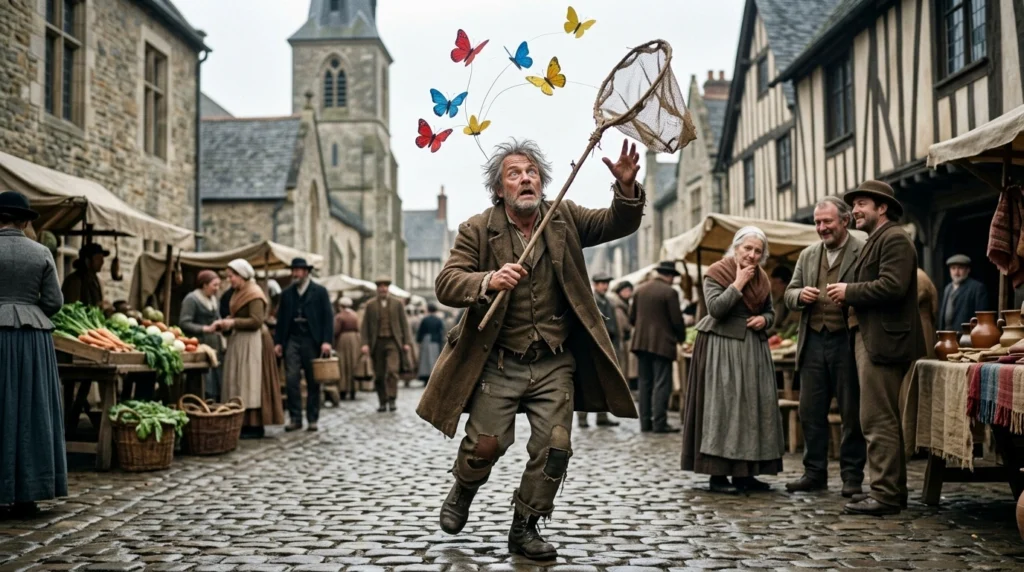
What Is a Metaphor for a Fool?
A metaphor for a fool is a figure of speech that compares a person who lacks good judgment to something else without using the words like or as.
These comparisons are not literal. Instead, they create a strong mental image that highlights carelessness, poor decisions, or a lack of wisdom.
Examples
- He is a sheep who follows everyone else.
- She became a puppet in someone else’s plan.
- He was a clown, turning every serious moment into a joke.
What Does “Fool” Mean?
A fool is a person who acts without good sense or makes poor decisions.
The word can describe someone who is careless, easily tricked, or lacking wisdom. Depending on the situation, it may sound humorous, critical, or old-fashioned.
Examples
- Don’t be a fool and ignore the warning.
- He felt like a fool after believing the rumor.
- We all act foolishly sometimes.
Best Metaphors for a Fool
| Metaphor | Meaning | Example |
|---|---|---|
| Sheep | Follows others without thinking | He was a sheep in the crowd. |
| Puppet | Controlled by someone else | She became a puppet in their scheme. |
| Clown | Acts foolishly for attention | He played the clown during the meeting. |
| Donkey | Stubborn and unwise | Stop being such a donkey. |
| Empty barrel | Makes noise without knowledge | He’s an empty barrel. |
| Broken compass | Lacks direction or judgment | He was a broken compass in life. |
| Headless chicken | Acts in panic without thinking | She ran around like a headless chicken. |
| Loose cannon | Behaves in an unpredictable way | He’s a loose cannon at work. |
| Lost sheep | Confused or easily misled | He looked like a lost sheep. |
| Paper crown | Pretends to be wise without real ability | He wore a paper crown of confidence. |
These metaphors describe different kinds of foolish behavior, so choose one that fits your context.
Metaphor for a Fool vs Simile
People often mix up metaphors and similes.
| Feature | Metaphor | Simile |
| Direct comparison | ✅ Yes | ❌ No |
| Uses “like” or “as” | ❌ No | ✅ Yes |
| Example | He is a sheep. | He is like a sheep. |
| Style | Strong and vivid | Softer comparison |
A metaphor says one thing is another. A simile compares two things using like or as.
Real-Life Examples
Conversation 1
Person A: Why did he invest without checking the facts?
Person B: He was a sheep following the crowd.
Lesson: This metaphor describes someone who copies others without thinking.
Conversation 2
Person A: Did she make her own decision?
Person B: No, she was a puppet the whole time.
Lesson: It suggests someone is controlled by others.
Conversation 3
Person A: Why was everyone laughing?
Person B: He acted like a clown during the speech.
Lesson: It describes silly behavior.
Conversation 4
Person A: He ignored every warning.
Person B: What a broken compass.
Lesson: This metaphor shows poor judgment.
Conversation 5
Person A: Why is he running everywhere?
Person B: He’s a headless chicken today.
Lesson: It describes panic and confusion.
Conversation 6
Person A: He thinks he knows everything.
Person B: He’s an empty barrel.
Lesson: It suggests someone talks a lot without real knowledge.
Conversation 7
Person A: Why did he trust the scam?
Person B: He was a lost sheep.
Lesson: This metaphor shows someone who is easily misled.

When Should You Use a Metaphor for a Fool?
Metaphors work best when you want to make your writing more engaging.
You can use them in:
- Stories
- Essays
- Creative writing
- Speeches
- Conversations
- Blogs
- Social media posts
- Character descriptions
- Literary analysis
- Humor
Choose a metaphor that matches the tone of your writing. Avoid expressions that could unnecessarily offend someone.
Common Mistakes
Incorrect
He is literally a sheep.
Correct
He is a sheep when making decisions.
Explanation: The comparison is figurative, not literal.
Incorrect
She became an empty bucket.
Correct
She is an empty barrel.
Explanation: “Empty barrel” is the recognized metaphor.
Incorrect
He is a clown because he works at a circus.
Correct
He is a clown in serious situations.
Explanation: The metaphor refers to behavior, not a profession.
Incorrect
He is a broken map.
Correct
He is a broken compass.
Explanation: A compass symbolizes guidance.
Incorrect
She is a lost goat.
Correct
She is a lost sheep.
Explanation: “Lost sheep” is the common metaphor.
Incorrect
He became a puppet because he likes toys.
Correct
He became a puppet controlled by others.
Explanation: The metaphor refers to manipulation.
Incorrect
He is a loose bicycle.
Correct
He is a loose cannon.
Explanation: Use the standard expression.
Quick Memory Trick
Remember this simple idea:
Wise people think. Fools follow.
Easy metaphors to remember:
- Sheep = follows others
- Puppet = controlled
- Empty barrel = talks without knowledge
- Broken compass = poor judgment
- Headless chicken = acts without thinking
Picture each image to remember its meaning.
Practice Quiz
1. Which metaphor describes someone who blindly follows others?
A. Sheep
B. Eagle
C. Oak tree
D. River
Answer: A
2. Which metaphor means someone is controlled by others?
A. Puppet
B. Mountain
C. Bridge
D. Candle
Answer: A
3. Which metaphor describes panic?
A. Headless chicken
B. Quiet lake
C. Tall tree
D. Bright star
Answer: A
4. Which metaphor suggests someone talks without knowledge?
A. Empty barrel
B. Full basket
C. Open book
D. Strong wall
Answer: A
5. Why do writers use metaphors?
A. To create vivid images
B. To make grammar harder
C. To confuse readers
D. To avoid punctuation
Answer: A