
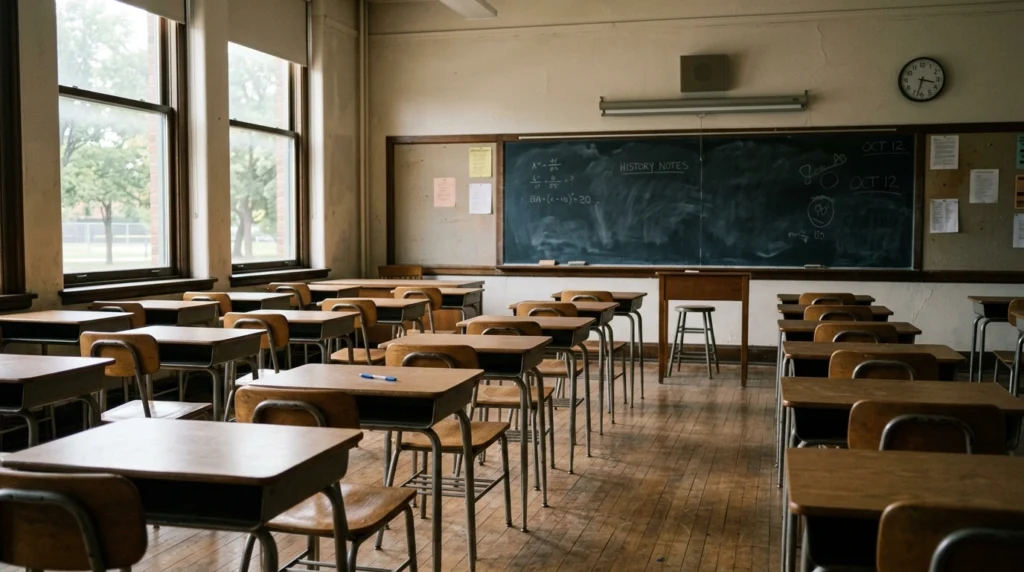
What Is a Metaphor for an Empty Classroom?
A metaphor compares one thing to another without using words such as like or as. Instead of describing a classroom as empty, it gives the room a symbolic identity that reflects silence, loneliness, possibility, or forgotten memories.
For example:
- The classroom was a sleeping giant.
- The room became a forgotten stage.
- The classroom was a silent museum.
Each metaphor helps readers imagine the scene instead of simply reading about it.
Why Use Metaphors for an Empty Classroom?
Metaphors make writing more vivid and emotional. They help readers picture the classroom and understand its atmosphere.
They are especially useful in:
- Creative writing
- School essays
- Poetry
- Speeches
- Storytelling
- English learning
- Classroom activities
A good metaphor also makes your writing easier to remember.
Metaphor for an Empty Classroom vs. Literal Description
| Feature | Metaphor | Literal Description |
|---|---|---|
| Purpose | Creates emotion and imagery | States facts directly |
| Example | The classroom was a forgotten library. | The classroom was empty. |
| Writing Style | Creative | Simple and direct |
| Best Used In | Stories, poems, speeches | Reports, instructions, news |
| Reader Impact | Builds imagination | Gives information quickly |
Summary: A literal description tells readers what they see, while a metaphor helps them feel the atmosphere. That’s why metaphors are popular in creative and descriptive writing.
Best Metaphors for an Empty Classroom
A Sleeping Giant
A classroom may appear quiet now, but it will soon come alive with students, laughter, and learning.
Example:
The classroom was a sleeping giant waiting for the morning bell.
A Forgotten Stage
Without students, the classroom feels like a stage after the actors have gone home.
Example:
The empty classroom stood as a forgotten stage after the final performance.
A Silent Library
This metaphor highlights peace, calmness, and complete silence.
Example:
The classroom became a silent library where every desk held untold stories.
A Deserted Island
This metaphor expresses loneliness and isolation.
Example:
The empty classroom felt like a deserted island surrounded by silence.
A Museum of Memories
Every chair, desk, and whiteboard reminds us of lessons, friendships, and shared experiences.
Example:
During summer break, the classroom became a museum of memories.
A Blank Canvas
An empty classroom also represents endless possibilities and new beginnings.
Example:
Every new school year begins with a classroom that is a blank canvas.
A Quiet Harbor
The room offers rest before another busy school day begins.
Example:
After the students left, the classroom became a quiet harbor.
A Frozen Moment
Everything seems paused until students return.
Example:
The classroom was a frozen moment waiting to come back to life.
A Whispering Memory
Even when empty, the room seems to hold echoes of past conversations.
Example:
The classroom remained a whispering memory long after graduation.
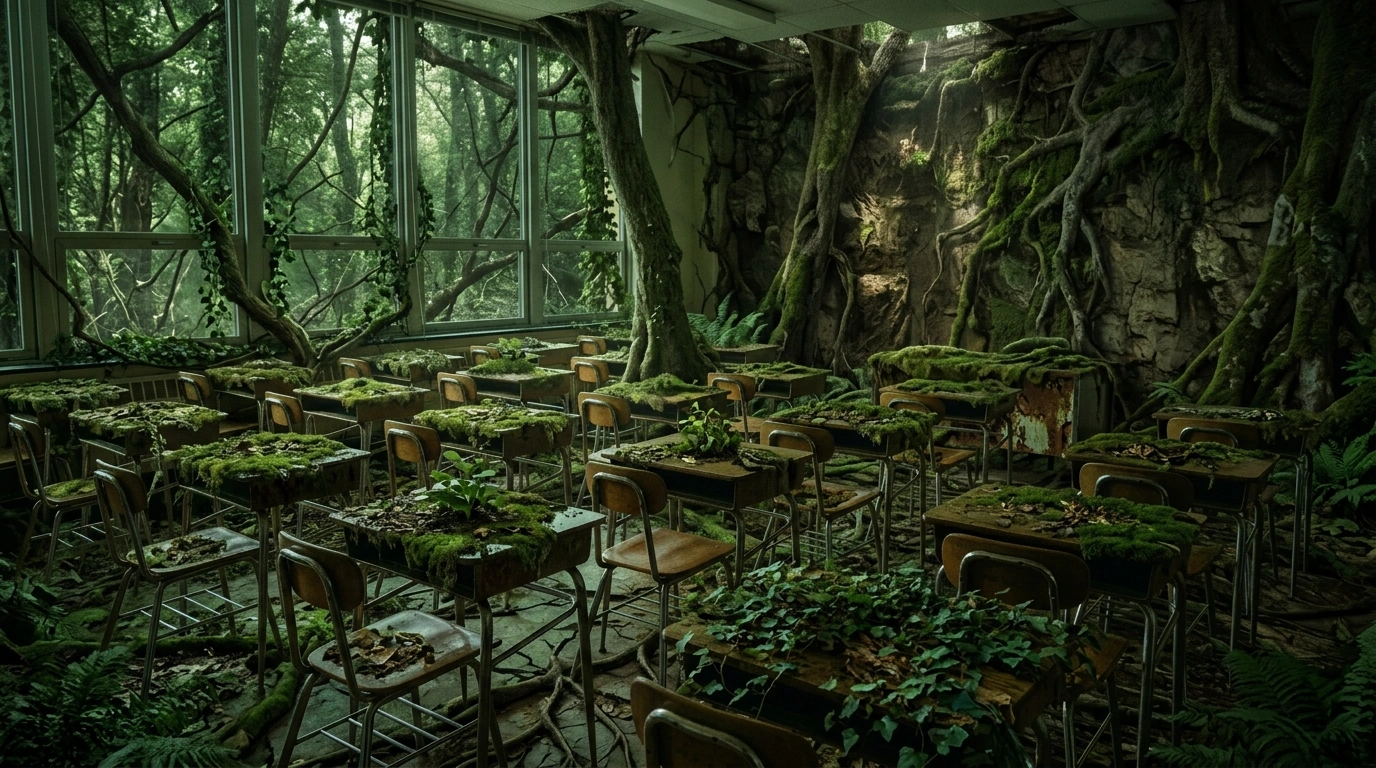
A Garden Waiting for Spring
Knowledge and growth will return when students arrive again.
Example:
The classroom was a garden waiting for spring.
Metaphors Based on Different Emotions
Metaphors That Show Silence
- A silent cave
- A sleeping forest
- A quiet church
- A paused melody
- A still lake
- A calm sky
- A sealed envelope
- A resting heartbeat
- A peaceful sanctuary
- A closed book
Metaphors That Show Loneliness
- A forgotten house
- A deserted island
- A lonely bench
- A fading echo
- A lost photograph
- An abandoned nest
- A broken clock
- A quiet hallway
- A distant star
- An empty shell
Metaphors That Show Hope
- A blank canvas
- A seed ready to grow
- A sunrise waiting to happen
- An unopened gift
- A fresh notebook
- A new beginning
- A bridge to tomorrow
- A lamp waiting to shine
- A path waiting for footsteps
- A window to the future
Real-Life Examples
Example 1
Sentence: The classroom was a sleeping giant before the first bell rang.
Meaning: It was quiet but would soon become active.
Example 2
Sentence: During the holidays, the classroom became a museum of memories.
Meaning: It reminded everyone of past lessons and friendships.
Example 3
Sentence: Without students, the room felt like a deserted island.
Meaning: It seemed lonely and lifeless.
Example 4
Sentence: Every September, the classroom is a blank canvas.
Meaning: It represents new opportunities and learning.
Example 5
Sentence: After graduation, the classroom became a whispering memory.
Meaning: It held emotional memories of the past.
How to Choose the Right Metaphor
The best metaphor depends on the feeling you want to create. An empty classroom can represent peace, loneliness, memories, or a fresh start.
For Peace and Quiet
Use these metaphors when the classroom feels calm.
- A silent library
- A quiet harbor
- A still lake
- A peaceful sanctuary
- A sleeping forest
For Loneliness
These metaphors create a sense of emptiness.
- A deserted island
- A forgotten house
- An empty shell
- A fading echo
- A lonely bench
For New Beginnings
Choose these when talking about a new school year or fresh opportunities.
- A blank canvas
- A seed ready to grow
- A sunrise waiting to happen
- A fresh notebook
- A bridge to tomorrow
For Memories
These metaphors work well in stories about graduation or old classrooms.
- A museum of memories
- A whispering memory
- A closed chapter
- A time capsule
- A forgotten stage
Common Mistakes When Using Metaphors
Using Too Many Metaphors
Adding several metaphors in one sentence can confuse readers.
Incorrect: The classroom was a desert, a ship, a mountain, and a library.
Correct: The classroom was a silent library.
Explanation: Stick to one clear image.
Choosing a Metaphor That Doesn’t Match the Mood
A cheerful metaphor may not fit a sad scene.
Incorrect: The empty classroom was a joyful carnival.
Correct: The empty classroom was a deserted island.
Explanation: Match the metaphor to the emotion.
Mixing Literal and Figurative Meanings
Keep your comparison consistent.
Incorrect: The classroom was a sleeping giant, and it literally snored.
Correct: The classroom was a sleeping giant waiting for students.
Explanation: A metaphor is symbolic, not literal.
Using Overcomplicated Comparisons
Simple metaphors are often stronger.
Instead of: The classroom was an intergalactic portal of forgotten educational dimensions.
Try: The classroom was a museum of memories.
Repeating the Same Metaphor
Using one metaphor repeatedly can make your writing feel repetitive.
Try different images depending on the situation.
Quick Memory Trick
Think about what an empty classroom reminds you of.
- Silence = Silent Library
- Loneliness = Deserted Island
- Memories = Museum of Memories
- Hope = Blank Canvas
- Rest = Sleeping Giant
- Fresh Start = New Notebook
- Peace = Quiet Harbor
If you remember these seven images, you’ll always have a fitting metaphor ready for your writing.
Practice Quiz
1. Which metaphor best represents peace?
A. Deserted Island
B. Silent Library
C. Burning Forest
D. Busy Market
Answer: B. Silent Library
2. Which metaphor symbolizes a new beginning?
A. Blank Canvas
B. Broken Clock
C. Empty Shell
D. Fading Echo
Answer: A. Blank Canvas
3. Which metaphor best describes loneliness?
A. Quiet Harbor
B. Deserted Island
C. Bright Sunrise
D. Blooming Garden
Answer: B. Deserted Island
4. Which metaphor represents memories?
A. Museum of Memories
B. Racing Car
C. Open Highway
D. Tall Building
Answer: A. Museum of Memories
5. Why do writers use metaphors?
A. To make writing more vivid and engaging.
B. To make sentences longer.
C. To replace grammar rules.
D. To avoid punctuation.
Answer: A. To make writing more vivid and engaging.