
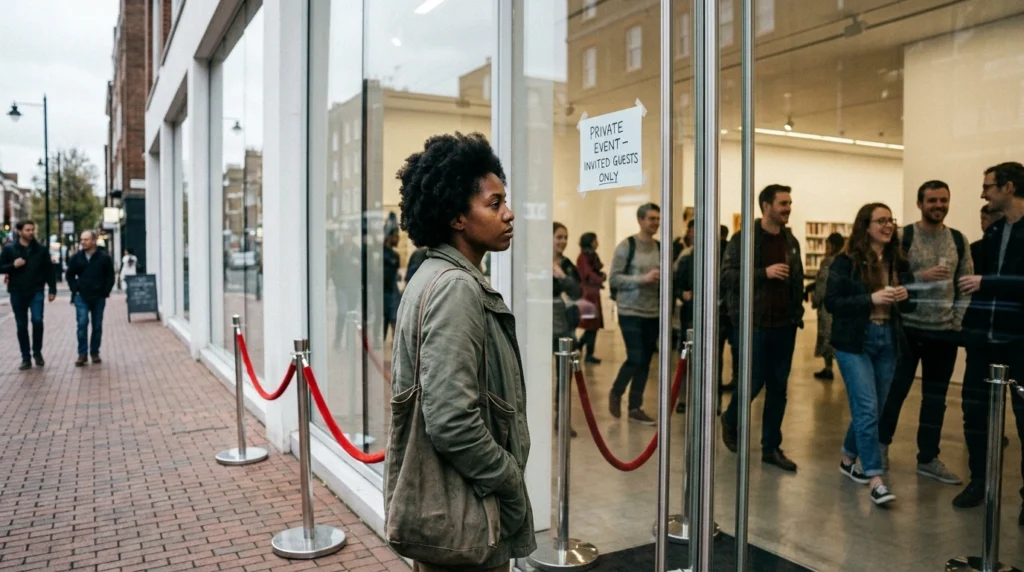
What Does Discrimination Mean in Figurative Language?
In simple words, discrimination means unfair treatment of people based on differences like:
- Color
- Gender
- Age
- Religion
- Background
- Social status
In figurative language, it is often shown as:
- Exclusion
- Separation
- Barrier-building
- Unequal access
- Invisible rules
Writers use metaphors to show emotional and social impact.
Best Metaphors for Discrimination
Here are clear and meaningful metaphors:
- A locked door with no key
Some people are not allowed in, no matter what they do. - A broken bridge between people
Connection is missing due to unfair barriers. - A shadow that follows certain groups
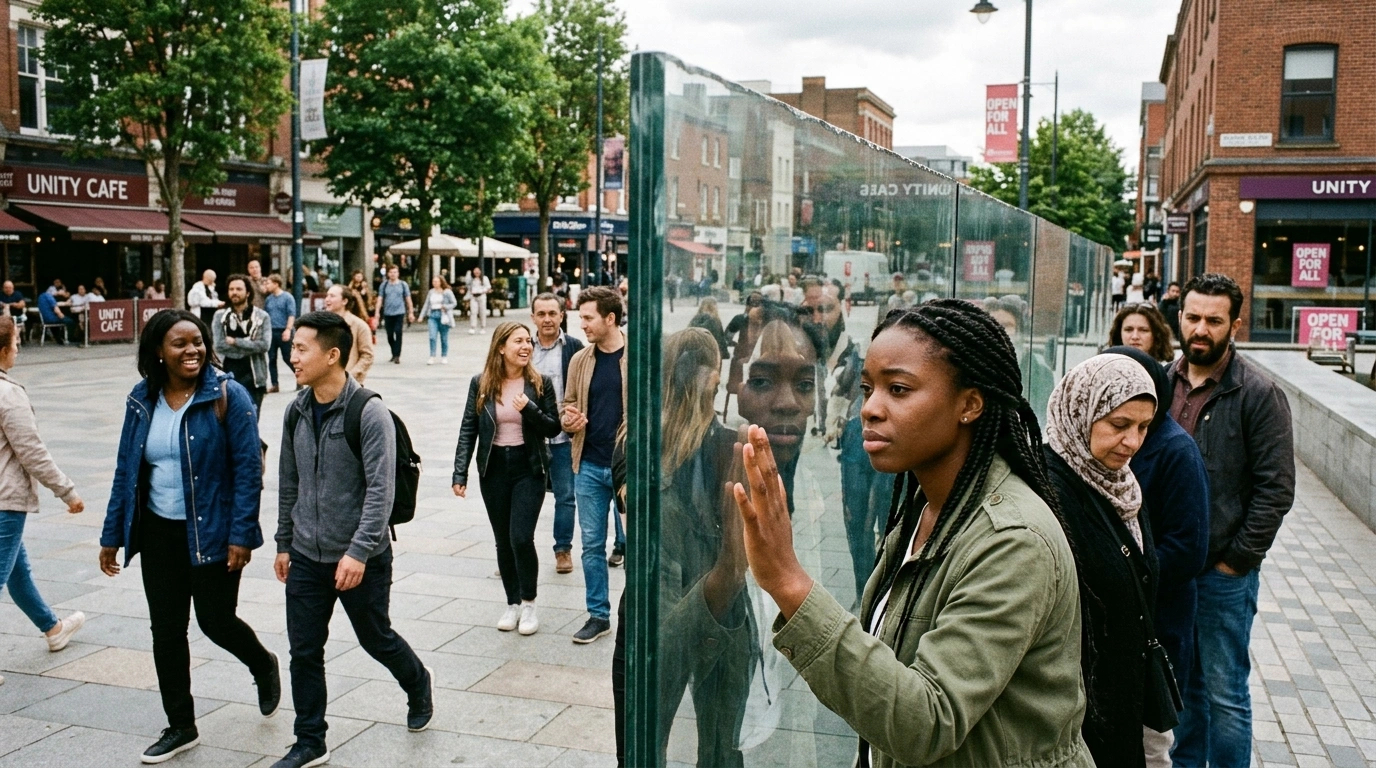
Unequal treatment that never disappears. - A glass wall in society
People can see opportunities but cannot reach them. - A divided table
Some people are included, others are left out. - A game with unfair rules
Not everyone has the same chance to win. - A garden with fenced sections
Growth is restricted for some groups. - A storm that only hits certain houses
Hardship affects some people more than others.
These metaphors help explain emotional and social inequality.
Why Writers Use Metaphors for Discrimination
Writers use metaphors because they:
- Make sensitive topics easier to understand
- Create emotional impact
- Help readers visualize unfairness
- Improve storytelling and essays
- Encourage empathy and awareness
In English writing, metaphors turn abstract social issues into clear mental images.
Real-Life Example Sentences
- Person A: Why didn’t she get selected?
Person B: It felt like a locked door with no key.
Lesson: Opportunity was unfairly blocked. - Person A: Why is he always left out?
Person B: There is a glass wall between him and the group.
Lesson: He is excluded despite being present. - Person A: Why is success harder for some?
Person B: It’s a game with unfair rules.
Lesson: Not everyone has equal chances. - Person A: What does society feel like for them?
Person B: A divided table.
Lesson: People are separated unfairly. - Person A: Why can’t they move forward?
Person B: A broken bridge stands in their way.
Lesson: Connection and opportunity are missing. - Person A: What is inequality like?
Person B: A shadow following certain groups.
Lesson: Unfair treatment persists. - Person A: Why is life harder for them?
Person B: A storm that only hits their house.
Lesson: Unequal impact of problems.
Types of Discrimination Metaphors
1. Barrier Metaphors
- Locked door
- Glass wall
These show blocked access.
2. Separation Metaphors
- Divided table
- Broken bridge
These show social distance.
3. Nature-Based Metaphors
- Storm
- Shadow
These show ongoing effects.
4. System Metaphors
- Unfair game
- Restricted garden
These show structural inequality.
When Should You Use These Metaphors?
- Essays about society
- Creative writing
- Human rights discussions
- Speech writing
- Educational content
- Journalism (carefully)
- ESL learning practice
- Literature analysis
They are useful when explaining complex social issues simply.
Common Mistakes When Using Discrimination Metaphors
- Using overly harsh or offensive imagery
Correct: Use neutral, respectful metaphors
Explanation: Topic is sensitive - Overgeneralizing groups
Correct: Focus on situation, not identity
Explanation: Avoid stereotypes - Mixing too many metaphors
Correct: Use one clear image
Explanation: Improves clarity - Using literal meaning
Correct: Understand symbolic language
Explanation: Metaphors are not real objects - Making it too complex
Correct: Keep simple for understanding
Explanation: Helps ESL learners
Quick Memory Trick
Think like this:
Discrimination = Barriers to fairness
Remember:
- Locked door → no access
- Glass wall → visible but unreachable
- Broken bridge → no connection
- Unfair game → unequal chances
So discrimination is like invisible walls in society.
Practice Quiz (Interactive SEO Section)
- What is a metaphor for discrimination?
A. A celebration
B. A glass wall
C. A park
Answer: B - “Locked door” means:
A. Equal access
B. Blocked opportunity
C. Open chance
Answer: B - A “broken bridge” shows:
A. Connection
B. Separation
C. Travel
Answer: B - “Unfair game” means:
A. Equal rules
B. No rules
C. Unequal chances
Answer: C - Discrimination metaphors show:
A. Fairness
B. Inequality
C. Weather
Answer: B