
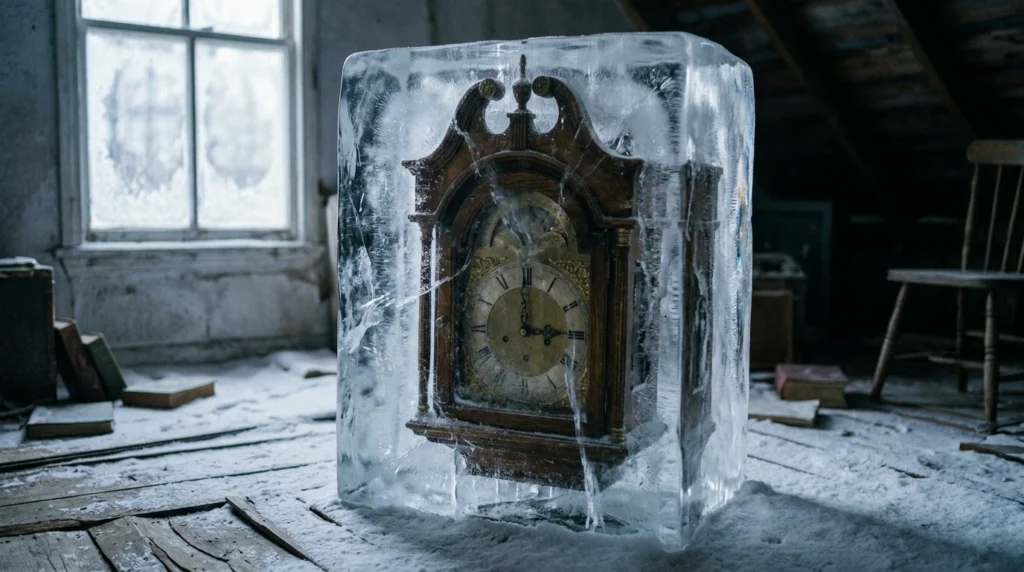
What Is a Metaphor for Ice?
A metaphor for ice is a figure of speech that uses ice or something closely connected to it to represent another idea or feeling.
Instead of talking about frozen water, the metaphor suggests qualities such as coldness, calmness, distance, beauty, or emotional control.
Examples
- Her heart was ice.
- His voice was a frozen river.
- The room became a glacier after the argument.
These expressions are figurative, not literal.
What Does Ice Symbolize?
Ice can have different meanings depending on the context.
It often represents:
- Emotional distance
- Calm under pressure
- Silence
- Fear
- Loneliness
- Strength
- Purity
- Stillness
Writers choose the meaning that best fits the situation.
Best Metaphors for Ice
| Metaphor | Meaning | Example |
|---|---|---|
| Frozen heart | Lack of warmth or compassion | His frozen heart never forgave the mistake. |
| Glacier | Slow, cold, and unchanging | Their friendship became a glacier. |
| Frozen river | Hidden emotions beneath a calm surface | She was a frozen river during the meeting. |
| Crystal wall | Emotional distance | A crystal wall stood between them. |
| Winter’s grip | Strong control or hardship | The town remained in winter’s grip. |
| Sheet of glass | Calm but fragile | His confidence was a sheet of glass. |
| Ice castle | Beautiful but difficult to approach | She lived inside an ice castle. |
| Block of ice | Emotionally cold person | He was a block of ice during the discussion. |
| Snow-covered mountain | Quiet strength | The old teacher was a snow-covered mountain. |
| Frozen mirror | Reflection without emotion | Her face became a frozen mirror. |
Each metaphor highlights a different quality of ice, so choose one that matches your message.
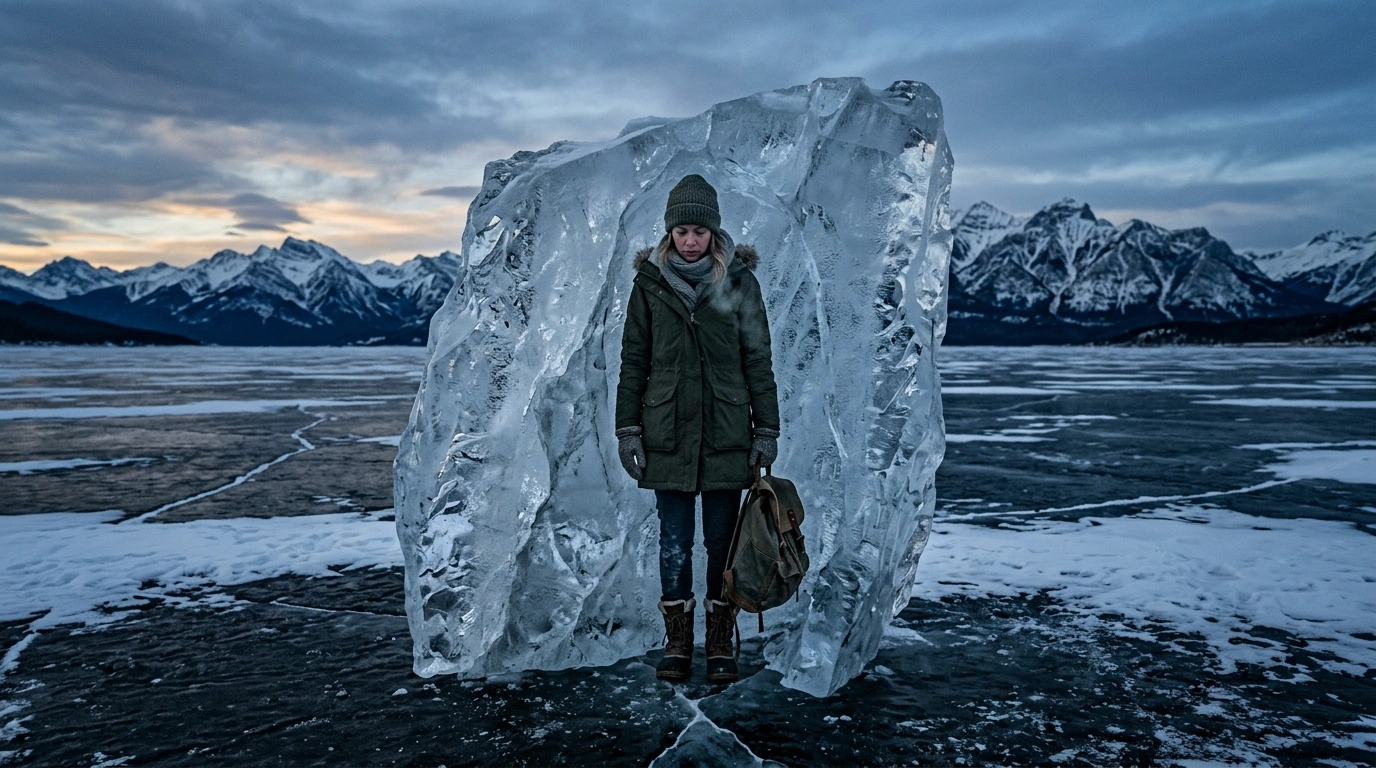
Metaphor for Ice vs Simile
Metaphors and similes both compare things, but they do so in different ways.
| Feature | Metaphor | Simile |
| Direct comparison | ✅ Yes | ❌ No |
| Uses “like” or “as” | ❌ No | ✅ Yes |
| Example | Her heart was ice. | Her heart was like ice. |
| Effect | More vivid | More direct |
A metaphor says something is another thing. A simile uses like or as to make the comparison.
Real-Life Examples
Conversation 1
Person A: Why didn’t he react?
Person B: His heart was ice.
Lesson: This metaphor suggests emotional coldness.
Conversation 2
Person A: Why is everyone so quiet?
Person B: The room became a glacier.
Lesson: It describes a cold, uncomfortable silence.
Conversation 3
Person A: She looks calm.
Person B: She’s a frozen river.
Lesson: She may have deep feelings beneath the surface.
Conversation 4
Person A: Why don’t they talk anymore?
Person B: A crystal wall stands between them.
Lesson: The metaphor shows emotional distance.
Conversation 5
Person A: How did he stay calm?
Person B: He was a snow-covered mountain.
Lesson: It represents quiet strength.
Conversation 6
Person A: Why does she seem hard to know?
Person B: She lives in an ice castle.
Lesson: This metaphor suggests emotional isolation.
Conversation 7
Person A: Why is he avoiding everyone?
Person B: He’s become a block of ice.
Lesson: It describes someone who has become emotionally distant.
When Should You Use a Metaphor for Ice?
Ice metaphors work well when describing emotions, relationships, or atmosphere.
You can use them in:
- Stories
- Poems
- Essays
- Speeches
- Novels
- Character descriptions
- Blog posts
- School assignments
- Creative writing
- Everyday conversations
Choose a metaphor that fits the emotion you want readers to feel.
Common Mistakes
Incorrect
She is literally ice.
Correct
Her heart was ice.
Explanation: The comparison is figurative.
Incorrect
He became a freezer.
Correct
He became a block of ice.
Explanation: Use a recognized metaphor.
Incorrect
The room was cold because it was a glacier.
Correct
The room became a glacier after the argument.
Explanation: The glacier represents emotional tension.
Incorrect
His feelings were frozen water.
Correct
His feelings were a frozen river.
Explanation: The metaphor creates a stronger image.
Incorrect
She lived in a snowball.
Correct
She lived in an ice castle.
Explanation: An ice castle symbolizes beauty and distance.
Incorrect
His face was an iceberg because it floated.
Correct
His face was a frozen mirror.
Explanation: Focus on the emotional meaning, not the physical object.
Incorrect
Winter grabbed the city.
Correct
The city remained in winter’s grip.
Explanation: This is a more natural metaphor.
Quick Memory Trick
Think of this simple idea:
Ice hides warmth beneath the surface.
Remember these easy metaphors:
- Heart of ice = emotional coldness
- Frozen river = hidden feelings
- Glacier = slow emotional distance
- Crystal wall = separation
- Snow-covered mountain = quiet strength
Picture each image to remember its meaning.
Practice Quiz
1. Which metaphor suggests emotional coldness?
A. Heart of ice
B. Bright sunshine
C. Green field
D. Open door
Answer: A
2. Which metaphor describes hidden emotions?
A. Frozen river
B. Fast train
C. Blue sky
D. Busy street
Answer: A
3. Which metaphor represents emotional distance?
A. Crystal wall
B. Warm blanket
C. Open window
D. Golden key
Answer: A
4. Which metaphor suggests calm strength?
A. Snow-covered mountain
B. Paper boat
C. Dry leaf
D. Empty bottle
Answer: A
5. Why do writers use ice metaphors?
A. To create vivid emotional images
B. To explain science
C. To avoid punctuation
D. To lengthen sentences
Answer: A