

What Is a Metaphor?
A metaphor is a figure of speech that compares two different things by saying one is the other. It creates a strong mental image without using the words like or as.
Examples:
- “Time is a thief.”
- “Life is a journey.”
- “Hope is a light.”
When describing a migraine, metaphors can capture the pain, pressure, confusion, or exhaustion that often comes with it.
What Is a Migraine?
A migraine is a neurological condition that causes recurring attacks of moderate to severe head pain. Many people also experience nausea, sensitivity to light or sound, or visual disturbances called aura.
Because each person’s experience is different, writers often use metaphors to describe how a migraine feels rather than trying to explain every symptom.
Best Metaphors for Migraine
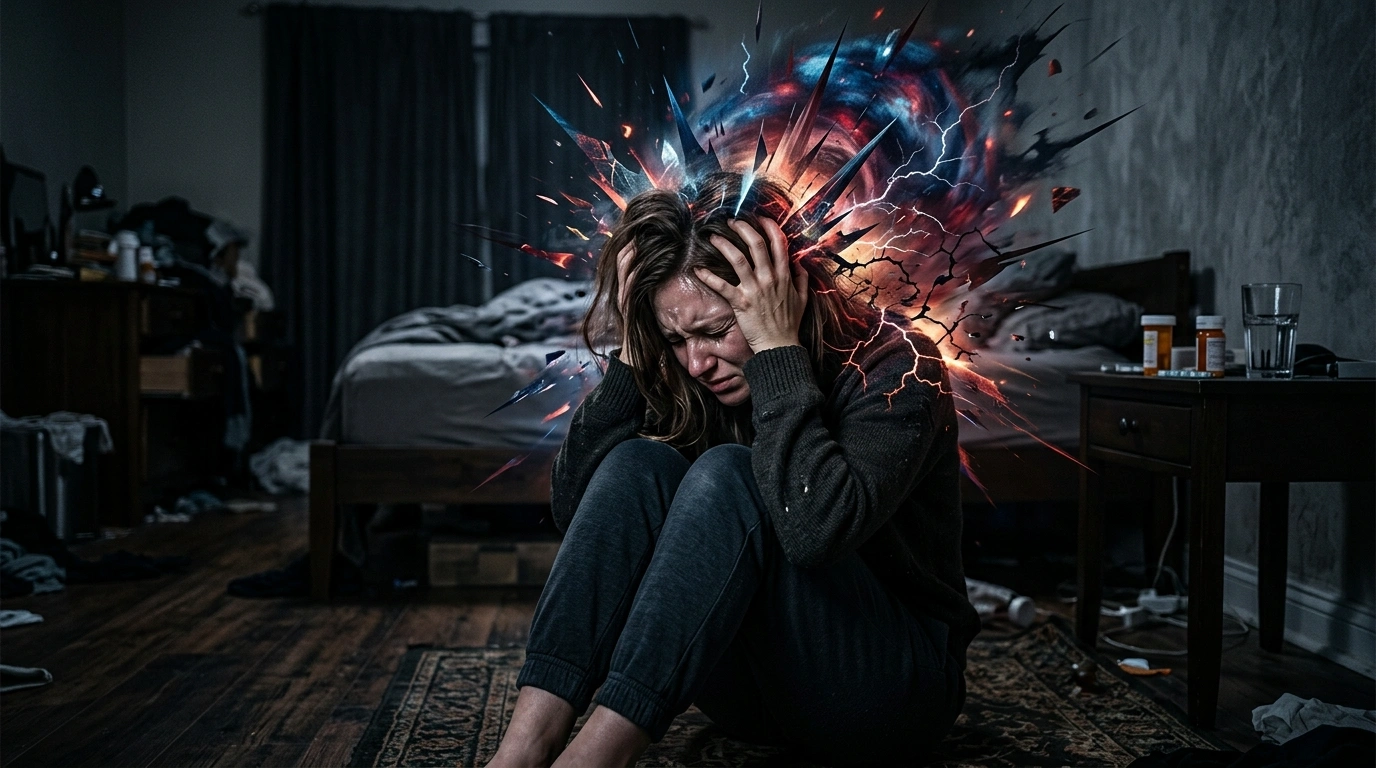
1. A Thunderstorm Inside the Head
A thunderstorm is loud, powerful, and difficult to ignore.
Meaning: Intense, overwhelming pain.
Example:
“My migraine was a thunderstorm trapped inside my head.”
2. A Tight Iron Band
An iron band feels heavy and impossible to escape.
Meaning: Constant pressure around the head.
Example:
“It felt as though an iron band wrapped tightly around my skull.”
3. A Volcano Ready to Erupt
A volcano builds pressure before exploding.
Meaning: Pain that grows stronger over time.
Example:
“The migraine was a volcano waiting to erupt.”
4. A Hammer Striking Steel
Repeated hammer blows create a sharp, pounding image.
Meaning: Throbbing or pulsing pain.
Example:
“Every heartbeat became a hammer striking steel.”
5. A Prison of Pain
A prison limits movement and freedom.
Meaning: Feeling trapped by the migraine.
Example:
“The migraine became a prison of pain that I couldn’t escape.”
6. A Black Cloud
Dark clouds block sunlight and create a gloomy atmosphere.
Meaning: Physical pain mixed with mental exhaustion.
Example:
“A black cloud settled over my thoughts.”
7. A Blinding Spotlight
A bright spotlight can feel unbearable.
Meaning: Extreme sensitivity to light.
Example:
“Every lamp became a blinding spotlight.”
8. A Tangled Maze
A maze makes it difficult to find the way.
Meaning: Brain fog and trouble thinking clearly.
Example:
“My thoughts wandered through a tangled maze.”
9. A Drum Beating Without Rest
A drum produces a steady rhythm.
Meaning: Continuous throbbing pain.
Example:
“My head was a drum that never stopped beating.”
10. An Ocean Wave
A wave rises, crashes, and then fades.
Meaning: Migraine pain often comes in powerful waves.
Example:
“The pain rolled over me in endless ocean waves.”
Comparison Table
| Metaphor | Meaning | Best Used For |
|---|---|---|
| Thunderstorm | Overwhelming pain | Personal stories |
| Iron band | Pressure around the head | Everyday descriptions |
| Volcano | Pain building over time | Creative writing |
| Hammer striking steel | Throbbing pain | Journals |
| Prison of pain | Feeling trapped | Emotional writing |
| Black cloud | Mental and physical exhaustion | Essays |
| Blinding spotlight | Light sensitivity | Health writing |
| Tangled maze | Brain fog | Personal experiences |
| Drum beating | Constant pounding | Stories |
| Ocean wave | Pain that comes and goes | Poetry and reflections |
Real-Life Examples of Metaphor for migraine
Conversation 1
Person A: Why are you sitting in a dark room?
Person B: My migraine feels like a thunderstorm inside my head.
Lesson: Describes intense pain.
Conversation 2
Person A: Are you okay?
Person B: It feels like an iron band is squeezing my head.
Lesson: Shows pressure.
Conversation 3
Person A: Can you focus?
Person B: My thoughts are stuck in a tangled maze.
Lesson: Explains brain fog.
Conversation 4
Person A: Why don’t you turn on the lights?
Person B: Every light is a blinding spotlight today.
Lesson: Describes light sensitivity.
Conversation 5
Person A: Is the pain getting worse?
Person B: It’s becoming a volcano ready to erupt.
Lesson: Shows increasing intensity.
Conversation 6
Person A: Is the pain constant?
Person B: My head is a drum that never stops beating.
Lesson: Explains throbbing pain.
Conversation 7
Person A: How does it feel now?
Person B: The pain comes in ocean waves.
Lesson: Describes changing intensity.
When Should You Use These Metaphors?
These metaphors are useful in:
- Personal essays
- Journal entries
- Creative writing
- Poetry
- Health blogs
- Awareness campaigns
- Speeches
- Patient stories
- Memoirs
- Fiction
Use metaphors to help readers understand the experience without exaggerating or confusing the message.
Common Mistakes
1. Mixing different metaphors
Incorrect:
“My migraine was a volcano sailing across the ocean.”
Correct:
“My migraine was a volcano ready to erupt.”
Explanation: Stick with one clear image.
2. Choosing unrealistic comparisons
Use metaphors that reflect the experience of pain, pressure, or sensitivity.
3. Overusing metaphors
A few well-chosen metaphors are more powerful than many mixed together.
4. Forgetting that migraines vary
Not everyone experiences migraines the same way. Present metaphors as possible descriptions, not universal facts.
5. Taking metaphors literally
Metaphors describe feelings and experiences. They are not medical explanations.
6. Ignoring the tone
A serious health topic calls for respectful language rather than humorous comparisons.
7. Using clichés too often
Try different images to keep your writing fresh and engaging.
Quick Memory Trick
Think about the common experiences of a migraine:
- Pressure → Iron band
- Pounding → Drum
- Growing pain → Volcano
- Light sensitivity → Blinding spotlight
- Brain fog → Tangled maze
- Overwhelming pain → Thunderstorm
Matching the symptom to the image makes each metaphor easier to remember.
Practice Quiz
1. Which metaphor best describes throbbing migraine pain?
A. Drum beating without rest
B. Blooming flower
C. Quiet library
D. Open window
Answer: A
2. Which metaphor represents light sensitivity?
A. Blinding spotlight
B. Gentle breeze
C. Calm lake
D. Soft blanket
Answer: A
3. Which metaphor describes growing pressure?
A. Volcano ready to erupt
B. Singing bird
C. Bright rainbow
D. Open field
Answer: A
4. Which metaphor represents brain fog?
A. Tangled maze
B. Straight road
C. Tall tree
D. Clear mirror
Answer: A
5. What is a metaphor?
A. A direct comparison without using “like” or “as”
B. A question
C. A list of facts
D. A command
Answer: A