
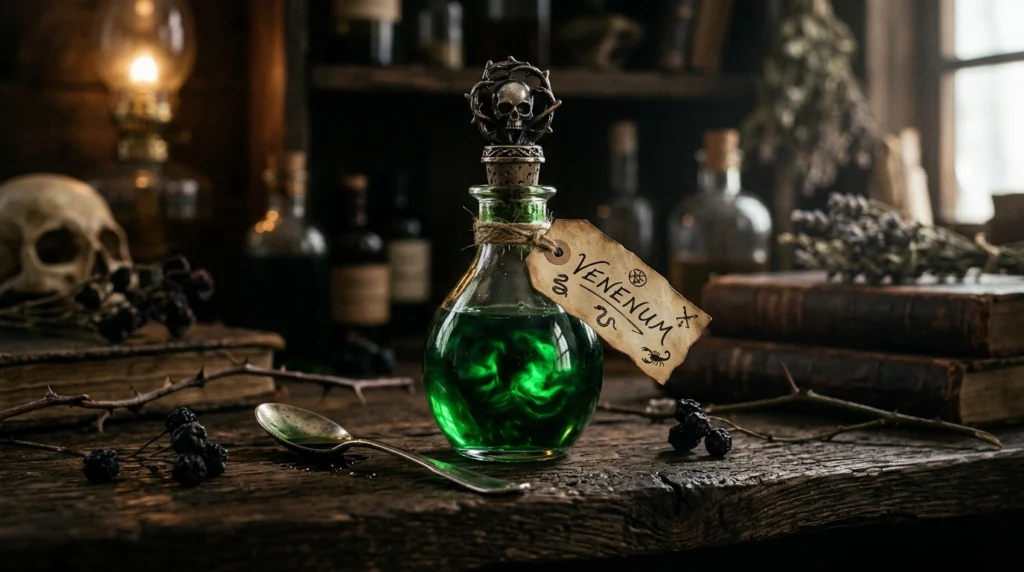
What Is a Metaphor for Poison?
A metaphor for poison is a figure of speech that compares a harmful emotion, person, habit, or situation to poison.
Instead of describing a real toxic substance, the metaphor represents something that quietly causes damage over time.
Examples
- Jealousy is a slow poison.
- Gossip became a venomous vine.
- Bitterness was a drop of poison in his heart.
These expressions are symbolic rather than literal.
What Does Poison Symbolize?
Poison has many symbolic meanings in literature and everyday language.
It often represents:
- Hatred
- Jealousy
- Betrayal
- Toxic relationships
- Lies
- Fear
- Corruption
- Anger
- Destructive habits
- Negative influence
The meaning depends on the context.
Best Metaphors for Poison
| Metaphor | Meaning | Example |
|---|---|---|
| Slow poison | Gradual emotional or mental harm | Jealousy became a slow poison. |
| Venomous vine | Harm that spreads quietly | Gossip was a venomous vine through the office. |
| Black smoke | Toxic influence | His anger filled the room like black smoke. |
| Rotten seed | Small problem that grows into harm | Hatred was a rotten seed in his mind. |
| Dark shadow | Constant negative influence | Fear became a dark shadow. |
| Rust on iron | Damage that happens slowly | Resentment was rust on their friendship. |
| Cracked foundation | Hidden damage | Lies became the cracked foundation of the relationship. |
| Invisible chain | Harm that limits freedom | Addiction was an invisible chain. |
| Thorny vine | Pain that keeps growing | Bitterness became a thorny vine. |
| Silent fire | Quiet destruction | Regret was a silent fire inside her. |
Each metaphor highlights a different form of emotional or psychological harm.
Metaphor for Poison vs Simile
Metaphors and similes both compare ideas, but they use different structures.
| Feature | Metaphor | Simile |
| Direct comparison | ✅ Yes | ❌ No |
| Uses “like” or “as” | ❌ No | ✅ Yes |
| Example | Jealousy is a slow poison. | Jealousy is like a slow poison. |
| Effect | Strong and vivid | More direct |
A metaphor makes a direct comparison, while a simile compares using like or as.
Real-Life Examples
Conversation 1
Person A: Why did their friendship end?
Person B: Resentment became rust on iron.
Lesson: Small hurts can slowly damage relationships.
Conversation 2
Person A: Why is gossip so harmful?
Person B: It’s a venomous vine.
Lesson: The metaphor shows how harmful words spread.
Conversation 3
Person A: Why can’t he let go of jealousy?
Person B: It’s a slow poison.
Lesson: Jealousy can quietly harm the person who holds it.
Conversation 4
Person A: Why does the team argue so much?
Person B: Lies cracked the foundation.
Lesson: Trust weakens when dishonesty grows.
Conversation 5
Person A: Why does she seem trapped?
Person B: Regret became an invisible chain.
Lesson: Emotional burdens can limit personal growth.
Conversation 6
Person A: Why is everyone uncomfortable?
Person B: Anger filled the room like black smoke.
Lesson: Negative emotions affect everyone nearby.
Conversation 7
Person A: Why is he always unhappy?
Person B: Bitterness grew into a thorny vine.
Lesson: Unresolved emotions can become harder to escape.

When Should You Use a Metaphor for Poison?
Poison metaphors help describe emotional, social, or moral harm without using literal language.
Use them in:
- Stories
- Novels
- Poems
- Essays
- Speeches
- Character descriptions
- Personal reflections
- Blog posts
- Literary analysis
- Creative writing
Choose a metaphor that matches the emotion or situation.
Common Mistakes
Incorrect
He literally drank poison because he was angry.
Correct
Anger became a slow poison.
Explanation: The metaphor is figurative.
Incorrect
Lies were poison bottles.
Correct
Lies cracked the foundation.
Explanation: The second image better represents hidden damage.
Incorrect
She became smoke.
Correct
Her anger became black smoke.
Explanation: Focus on the emotion, not the person.
Incorrect
Bitterness is a knife.
Correct
Bitterness is a thorny vine.
Explanation: The vine better represents pain that grows over time.
Incorrect
Fear became a monster poison.
Correct
Fear became a dark shadow.
Explanation: Keep the metaphor natural and easy to picture.
Incorrect
His mind was poison.
Correct
Jealousy became a slow poison in his mind.
Explanation: Explain what causes the harm.
Incorrect
The relationship exploded because of poison.
Correct
Resentment became rust on their relationship.
Explanation: The metaphor emphasizes gradual damage.
Quick Memory Trick
Think of this phrase:
Poison often harms little by little, not all at once.
Remember these easy metaphors:
- Slow poison = jealousy
- Rust on iron = resentment
- Thorny vine = bitterness
- Black smoke = anger
- Cracked foundation = lies
Picture each image to remember its meaning.
Practice Quiz
1. Which metaphor best describes jealousy?
A. Slow poison
B. Bright rainbow
C. Fresh breeze
D. Open window
Answer: A
2. Which metaphor represents harmful gossip?
A. Venomous vine
B. Green garden
C. Blue river
D. Golden field
Answer: A
3. Which metaphor symbolizes hidden damage in a relationship?
A. Cracked foundation
B. Tall mountain
C. Wide bridge
D. Open gate
Answer: A
4. Which metaphor represents bitterness?
A. Thorny vine
B. Soft pillow
C. White cloud
D. Calm sea
Answer: A
5. Why do writers use poison metaphors?
A. To describe emotional harm with vivid images
B. To explain chemistry
C. To avoid grammar
D. To make paragraphs longer
Answer: A