
What Is a Metaphor for Television?
A metaphor for television is a figure of speech that compares television to another object or idea to highlight its influence, purpose, or effect.
Instead of describing a television set directly, these metaphors express ideas such as storytelling, connection, entertainment, learning, or persuasion.
Examples
- Television is a window to the world.
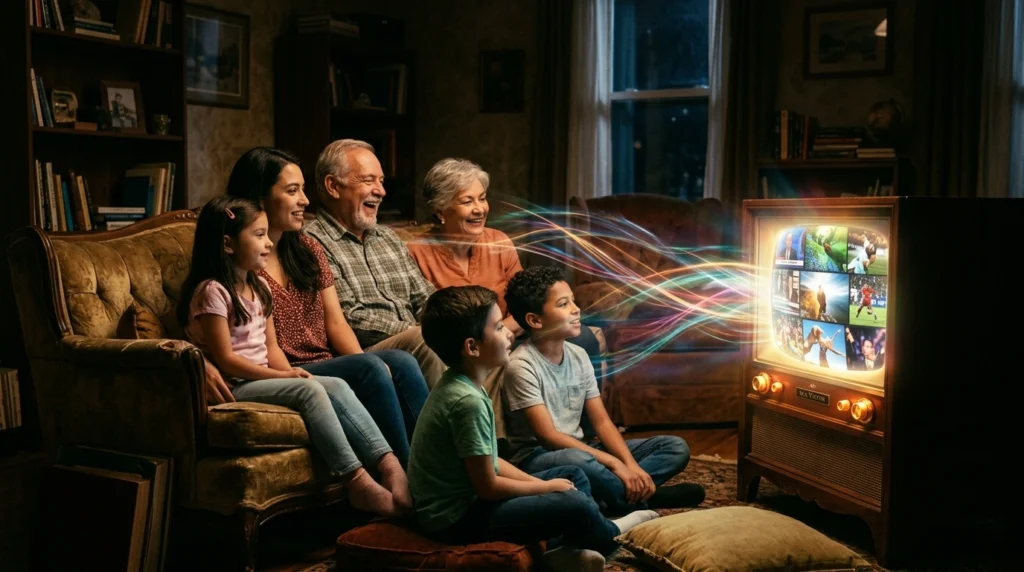
- It became the family’s campfire every evening.
- The screen is a mirror of society.
These expressions are figurative, not literal.
What Does Television Symbolize?
Television can symbolize many ideas depending on the context.
It often represents:
- Entertainment
- Information
- Communication
- Culture
- Influence
- Shared experiences
- Learning
- Escapism
- Storytelling
- Public opinion
The meaning changes with the writer’s purpose.
Best Metaphors for Television
| Metaphor | Meaning | Example |
|---|---|---|
| Window to the world | A way to see distant places and ideas | Television is a window to the world. |
| Family campfire | A place where people gather | The TV became the family’s campfire. |
| Mirror of society | Reflects culture and behavior | Television is a mirror of society. |
| Story bridge | Connects people through stories | The screen became a story bridge. |
| Digital stage | A place where life is performed | Television is a digital stage. |
| Magic window | Opens new worlds | The old TV was a magic window. |
| Cultural classroom | Teaches ideas and traditions | Television became a cultural classroom. |
| Lighthouse of news | Guides people with information | The evening news was a lighthouse. |
| Living picture book | Brings stories to life | Television is a living picture book. |
| River of stories | A constant flow of entertainment | Television is a river of stories. |
Each metaphor highlights a different role that television plays in everyday life.
Metaphor for Television vs Simile
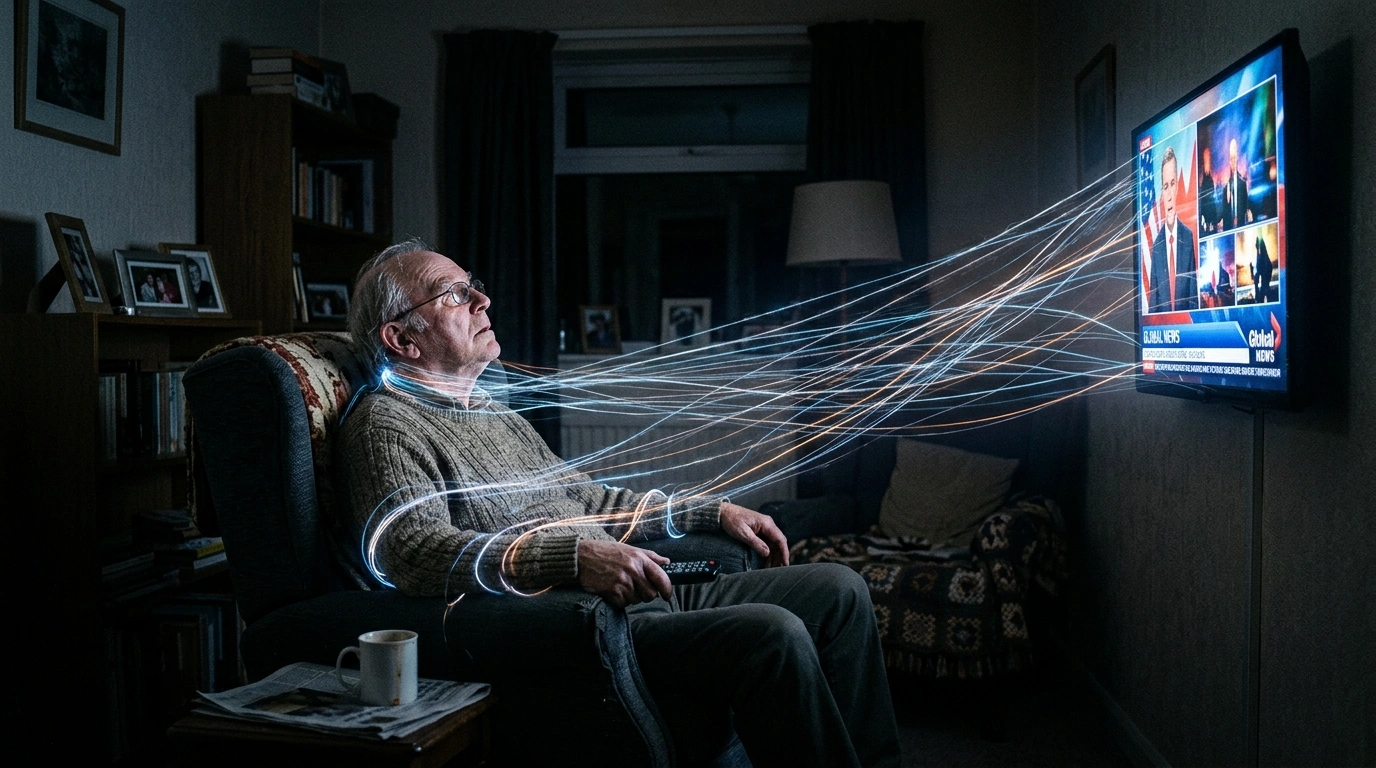
Metaphors and similes both compare ideas, but they do so differently.
| Feature | Metaphor | Simile |
| Direct comparison | ✅ Yes | ❌ No |
| Uses “like” or “as” | ❌ No | ✅ Yes |
| Example | Television is a window to the world. | Television is like a window to the world. |
| Effect | Strong and vivid | More direct |
A metaphor makes a direct comparison, while a simile uses like or as.
Real-Life Examples
Conversation 1
Person A: Why do you enjoy documentaries?
Person B: Television is my window to the world.
Lesson: The metaphor emphasizes learning and discovery.
Conversation 2
Person A: Why does everyone watch together?
Person B: It’s our family campfire.
Lesson: The metaphor highlights togetherness.
Conversation 3
Person A: What do TV shows say about us?
Person B: They’re a mirror of society.
Lesson: Television reflects culture and values.
Conversation 4
Person A: Why do stories on TV connect people?
Person B: It’s a story bridge.
Lesson: The metaphor suggests shared experiences.
Conversation 5
Person A: How did people learn about the world before the internet?
Person B: Television was a magic window.
Lesson: It highlights discovery and imagination.
Conversation 6
Person A: Why do children learn from educational programs?
Person B: Television is a cultural classroom.
Lesson: The metaphor emphasizes learning.
Conversation 7
Person A: Why do people watch the evening news?
Person B: It’s a lighthouse of news.
Lesson: The metaphor represents guidance and reliable information.
When Should You Use a Metaphor for Television?
Television metaphors make writing more descriptive and engaging.
Use them in:
- Essays
- Stories
- Speeches
- Blog posts
- Media analysis
- School assignments
- Creative writing
- Character descriptions
- Reviews
- Everyday conversations
Choose a metaphor that matches the message you want to convey.
Common Mistakes
Incorrect
Television is literally a window.
Correct
Television is a window to the world.
Explanation: The comparison is symbolic.
Incorrect
The TV became a fireplace.
Correct
The TV became the family’s campfire.
Explanation: The metaphor emphasizes gathering together.
Incorrect
The screen is society.
Correct
The screen is a mirror of society.
Explanation: The mirror symbolizes reflection.
Incorrect
Television is a road.
Correct
Television is a story bridge.
Explanation: A bridge better represents connection.
Incorrect
The TV is a school building.
Correct
Television is a cultural classroom.
Explanation: The metaphor focuses on learning rather than the physical place.
Incorrect
The television became magic.
Correct
The television became a magic window.
Explanation: The full metaphor creates a clearer image.
Incorrect
TV is a river because it has water.
Correct
Television is a river of stories.
Explanation: The river symbolizes a continuous flow of content.
Quick Memory Trick
Think of this phrase:
Television opens minds through stories.
Remember these easy metaphors:
- Window to the world = learning
- Family campfire = togetherness
- Mirror of society = culture
- Story bridge = connection
- River of stories = endless entertainment
Picture each image to remember its meaning.
Practice Quiz
1. Which metaphor represents learning about the world?
A. Window to the world
B. Closed box
C. Empty shelf
D. Broken chair
Answer: A
2. Which metaphor symbolizes family togetherness?
A. Family campfire
B. Busy highway
C. Tall tower
D. Empty room
Answer: A
3. Which metaphor reflects culture?
A. Mirror of society
B. Blank wall
C. Quiet road
D. Dark cave
Answer: A
4. Which metaphor describes a steady flow of entertainment?
A. River of stories
B. Frozen lake
C. Stone path
D. Wooden fence
Answer: A
5. Why do writers use television metaphors?
A. To create vivid and meaningful images
B. To make grammar harder
C. To confuse readers
D. To make sentences longer
Answer: A