

What Is a Metaphor?
A metaphor is a figure of speech that compares two different things by saying one is the other. It creates a mental picture without using the words like or as.
Examples:
- “Time is a thief.”
- “Life is a journey.”
- “Hope is a sunrise.”
Metaphors make writing more expressive and help readers understand ideas through familiar images.
What Does “Being Late” Mean?
Being late means arriving or happening after the expected or planned time. It can refer to school, work, appointments, events, deadlines, or everyday activities.
People may be late because of traffic, poor planning, unexpected problems, or simple forgetfulness. Writers often use metaphors to describe these situations in a more creative way.
Best Metaphors for Being Late
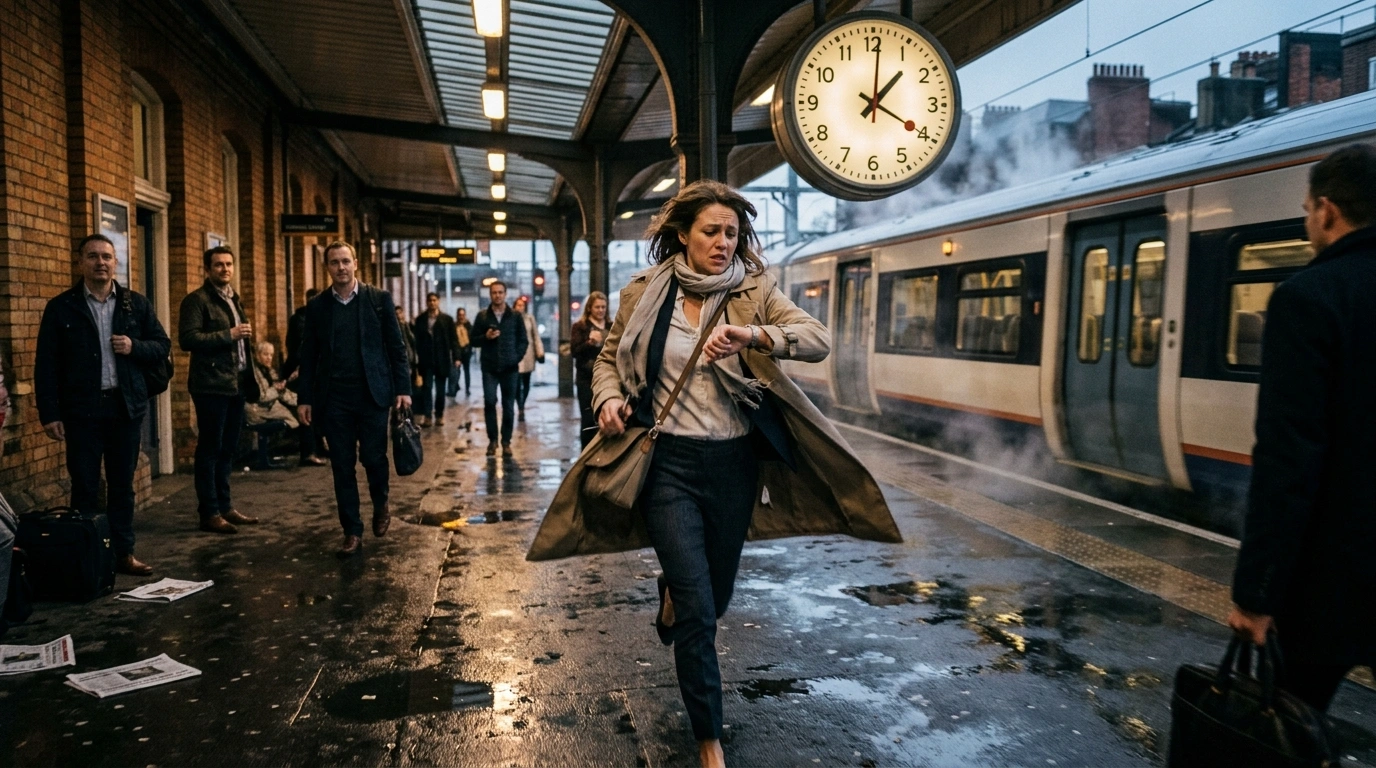
1. Missing the Train
A train leaves on time, whether you’re ready or not.
Meaning: Missing an opportunity because you arrived too late.
Example:
“He missed the train of opportunity by waiting too long.”
2. The Last Leaf to Fall
The final leaf falls long after the others.
Meaning: Arriving after everyone else.
Example:
“She was the last leaf to fall into the classroom.”
3. A Turtle at a Race
A turtle moves steadily but slowly.
Meaning: Taking much longer than expected.
Example:
“He was a turtle at a race every Monday morning.”
4. Chasing the Sunset
The sun keeps moving toward the horizon.
Meaning: Trying to catch something that is already slipping away.
Example:
“I spent the morning chasing the sunset instead of arriving on time.”
5. A Clock with Slow Hands
A slow clock always falls behind.
Meaning: Someone who is consistently late.
Example:
“His schedule was a clock with slow hands.”
6. A Ship Arriving After the Tide
Ships depend on the right tide to dock easily.
Meaning: Arriving too late to benefit from the opportunity.
Example:
“Our team was a ship arriving after the tide.”
7. The Final Runner Crossing the Finish Line
The race is nearly over before the last runner arrives.
Meaning: Being the last person to arrive.
Example:
“He entered the meeting as the final runner crossing the finish line.”
8. A Star Appearing After Dawn
Stars disappear as daylight comes.
Meaning: Showing up after the important moment has passed.
Example:
“My reply was a star appearing after dawn.”
9. A Boat Drifting Behind the Fleet
One boat struggles to keep up with the others.
Meaning: Falling behind everyone else.
Example:
“She felt like a boat drifting behind the fleet.”
10. Yesterday’s Newspaper
Yesterday’s news is no longer current.
Meaning: Arriving too late to make an impact.
Example:
“My excuse felt like yesterday’s newspaper.”
Comparison Table
| Metaphor | Meaning | Best Used For |
|---|---|---|
| Missing the train | Missing an opportunity | Career and education |
| Last leaf to fall | Arriving after everyone | Stories |
| Turtle at a race | Slow progress | Everyday conversation |
| Chasing the sunset | Trying to catch lost time | Motivational writing |
| Clock with slow hands | Constant lateness | Humor |
| Ship after the tide | Missing the right moment | Business and life lessons |
| Final runner | Last to arrive | School and sports |
| Star after dawn | Too late to matter | Creative writing |
| Boat behind the fleet | Falling behind | Teamwork |
| Yesterday’s newspaper | Outdated timing | Essays and speeches |
Real-Life Examples
Conversation 1
Person A: Why did you miss the meeting?
Person B: I missed the train before I even reached the station.
Lesson: A delay caused a missed opportunity.
Conversation 2
Person A: You were the last one here.
Person B: I guess I was the last leaf to fall.
Lesson: A creative way to describe arriving last.
Conversation 3
Person A: You always arrive after everyone else.
Person B: My mornings are a clock with slow hands.
Lesson: Suggests a habit of being late.
Conversation 4
Person A: We almost started without you.
Person B: I was the final runner crossing the finish line.
Lesson: Describes barely making it.
Conversation 5
Person A: Why didn’t you apply sooner?
Person B: I arrived after the tide had already turned.
Lesson: Opportunity was missed.
Conversation 6
Person A: I couldn’t finish before the deadline.
Person B: I was chasing the sunset all day.
Lesson: Trying to catch up with time.
Conversation 7
Person A: Your reply came very late.
Person B: It was yesterday’s newspaper by then.
Lesson: Highlights delayed communication.
When Should You Use These Metaphors?
These metaphors are useful in:
- School essays
- Creative writing
- Speeches
- Personal stories
- Blogs
- Workplace communication
- Motivational articles
- Poetry
- Journal entries
- Social media captions
Choose a metaphor that matches the tone and purpose of your writing.
Common Mistakes
1. Mixing different metaphors
Incorrect:
“I missed the train while sailing through the desert.”
Correct:
“I missed the train.”
Explanation: Use one clear image at a time.
2. Choosing unrelated comparisons
Pick metaphors that clearly suggest delay, missed timing, or slow progress.
3. Overusing metaphors
Too many metaphors can confuse readers. A few strong ones are enough.
4. Taking metaphors literally
Remember that metaphors create images rather than describe real events.
5. Forgetting the context
Some metaphors fit business writing better than creative stories.
6. Repeating the same metaphor
Use different images to keep your writing interesting.
7. Ignoring the emotional tone
A humorous story may suit a playful metaphor, while a serious speech may need a more thoughtful comparison.
Quick Memory Trick
Think about what happens when you’re late.
You:
- Miss opportunities.
- Fall behind.
- Arrive after others.
- Race against time.
Now connect those ideas with these images:
- Missing the train → Missed chance
- Clock with slow hands → Habitual lateness
- Final runner → Last to arrive
- Boat behind the fleet → Falling behind
- Chasing the sunset → Trying to catch up
These images make each metaphor easy to remember.
Practice Quiz
1. Which metaphor best describes missing an opportunity because of lateness?
A. Missing the train
B. Bright rainbow
C. Blooming flower
D. Tall mountain
Answer: A
2. Which metaphor represents always being behind schedule?
A. Clock with slow hands
B. Fast airplane
C. Rising sun
D. Open road
Answer: A
3. Which metaphor describes arriving last?
A. Final runner crossing the finish line
B. First bird singing
C. Shining star
D. Open gate
Answer: A
4. Which metaphor represents trying to catch up with time?
A. Chasing the sunset
B. Building a house
C. Climbing a tree
D. Reading a book
Answer: A
5. What is a metaphor?
A. A direct comparison without using “like” or “as”
B. A list of facts
C. A question
D. A command
Answer: A