
What Is Kintsugi?
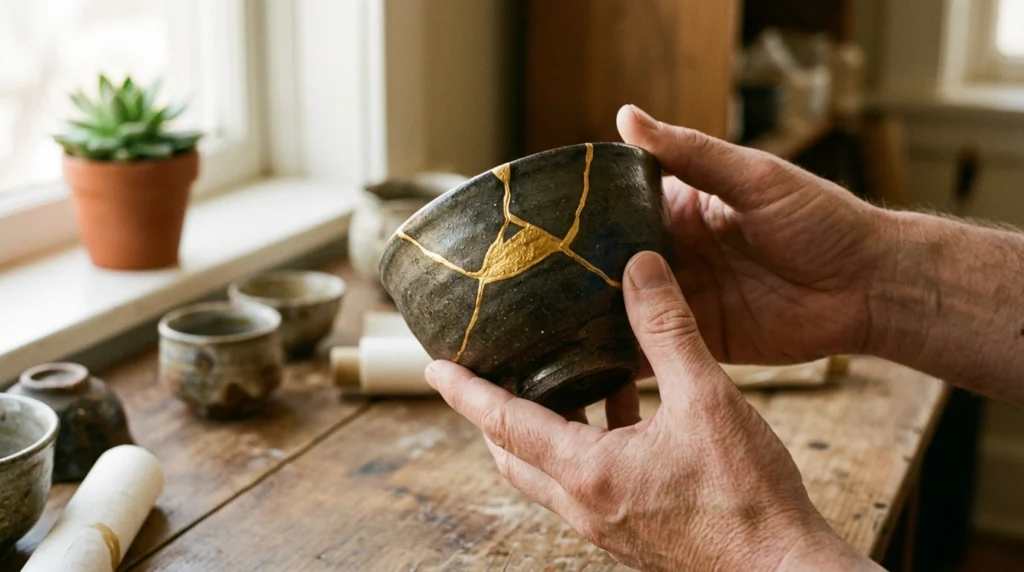
Kintsugi is a traditional Japanese method of repairing broken pottery using a special gold or silver lacquer.
Instead of hiding cracks, the repair highlights them. The broken pieces are joined together, and the lines of repair become part of the design.
Key ideas of kintsugi:
- Broken objects are not thrown away
- Cracks are visible and valued
- Repair is done with gold, not hidden glue
- The object becomes unique after repair
In simple terms, kintsugi teaches that broken things can still be beautiful.
Kintsugi Metaphor for Life Meaning
The kintsugi metaphor for life means that human beings are like broken pottery. We all face emotional cracks caused by life experiences such as:
- Failure
- Loss
- Rejection
- Trauma
- Disappointment
Instead of seeing these moments as destruction, kintsugi teaches us to see them as part of our transformation.
Just like pottery repaired with gold, people become more meaningful after healing. The cracks do not disappear—they become part of who we are.
Brokenness Is Not the End
Many people think being “broken” means something is over. But kintsugi shows a different truth.
Broken pottery is not discarded. It is repaired and given new life.
In the same way:
- A failed relationship does not end your worth
- A mistake does not define your future
- A setback does not erase your potential
Brokenness is not the end—it is a turning point.
Scars Tell Your Story
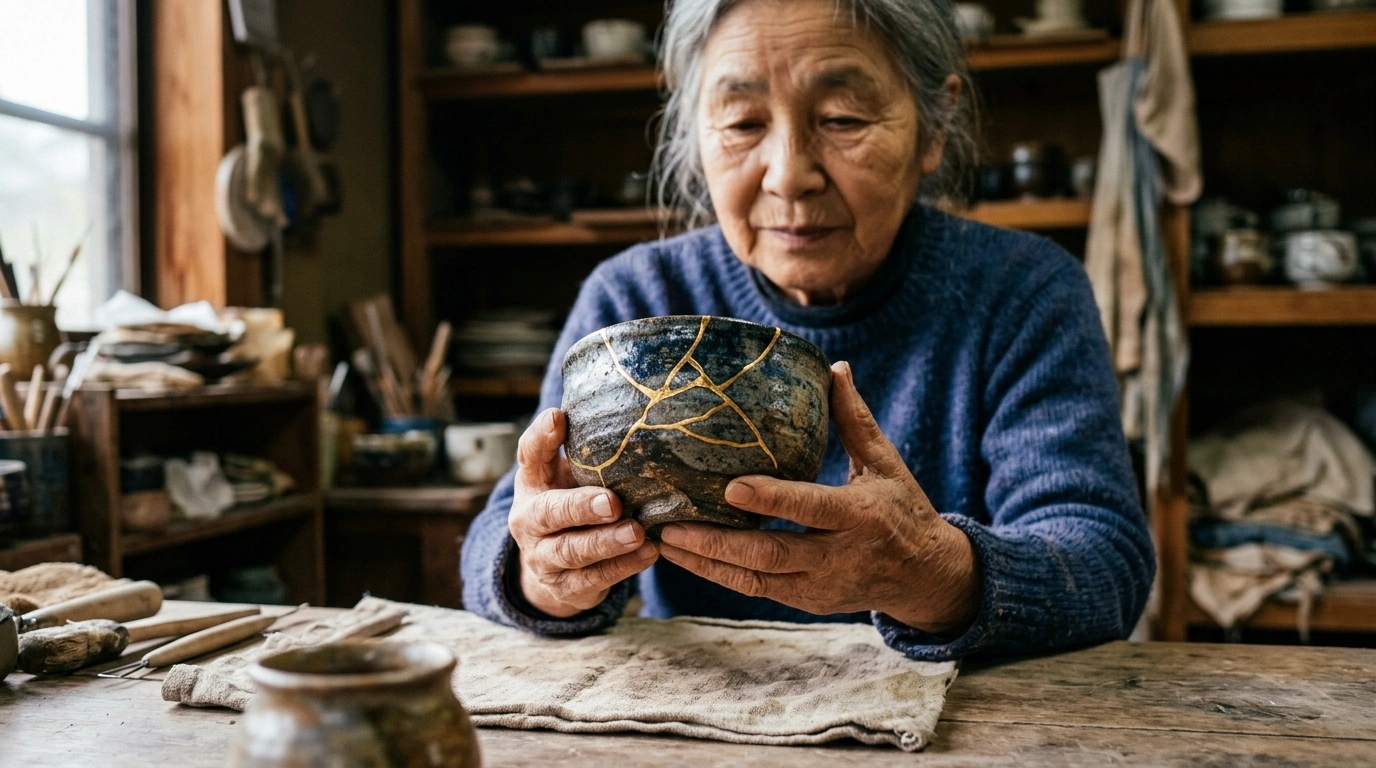
In kintsugi, the cracks are not hidden. They are highlighted with gold.
This is a powerful life lesson. Our emotional scars also tell a story of survival.
Scars mean:
- You went through something difficult
- You survived pain
- You learned something important
- You are still standing
Instead of hiding your scars, kintsugi encourages you to see them as proof of strength.
Healing Creates Strength
When pottery is repaired, it does not return to its original form. It becomes stronger in the repaired areas.
Life works the same way.
After emotional pain, people often:
- Develop resilience
- Gain wisdom
- Understand others better
- Build inner strength
Healing is not just recovery—it is transformation.
Imperfection Is Part of Beauty
Kintsugi challenges the idea that perfection is necessary for value.
A repaired bowl is not “flawed”—it is unique.
In life, this means:
- You do not need to be perfect to be worthy
- Your mistakes are part of your identity
- Your journey matters more than perfection
Imperfection is not something to hide. It is something that makes you real.
Learning to Accept Change
Kintsugi also teaches acceptance. Once pottery is broken and repaired, it is never exactly the same again.
Life changes us in similar ways:
- We grow older
- We change emotionally
- We evolve through experience
Instead of resisting change, kintsugi teaches us to accept it and find meaning in it.
Emotional Growth Through Pain
Pain is never easy, but it often leads to growth.
The kintsugi metaphor for life shows that emotional suffering can lead to:
- Deeper empathy
- Stronger character
- Better self-understanding
- Greater appreciation of life
Without challenges, growth would remain limited.
Self-Worth After Breaking
One of the strongest messages of kintsugi is self-worth after damage.
A broken bowl is still valuable after repair. It is not less than before—it is different and often more meaningful.
In life, this means:
- Your worth does not disappear after failure
- You are not “less” because you were hurt
- You can still rebuild your life beautifully
Comparison Table: Kintsugi vs Life Lessons
| Aspect | Kintsugi Practice | Life Meaning |
|---|---|---|
| Brokenness | Cracks in pottery | Emotional pain or failure |
| Repair | Gold lacquer | Healing and recovery |
| Visibility | Cracks are shown | Scars are acknowledged |
| Result | Unique artwork | Stronger personality |
| Message | Beauty in imperfection | Growth through pain |
Real-Life Examples of Kintsugi Thinking
Example 1
A student fails an exam but learns better study habits and later succeeds.
Example 2
A person loses a job but finds a better career path afterward.
Example 3
A broken relationship leads to stronger emotional understanding in future relationships.
Example 4
Someone overcomes illness and becomes more grateful for life.
Example 5
A mistake in business leads to better decision-making skills.
Each situation shows how “brokenness” can lead to growth.
How to Apply Kintsugi Mindset in Life
You can use this mindset in daily life by:
- Accepting your mistakes instead of hiding them
- Learning from failure instead of fearing it
- Being kind to your past self
- Viewing challenges as lessons
- Rebuilding confidence step by step
This mindset helps you grow instead of giving up.