
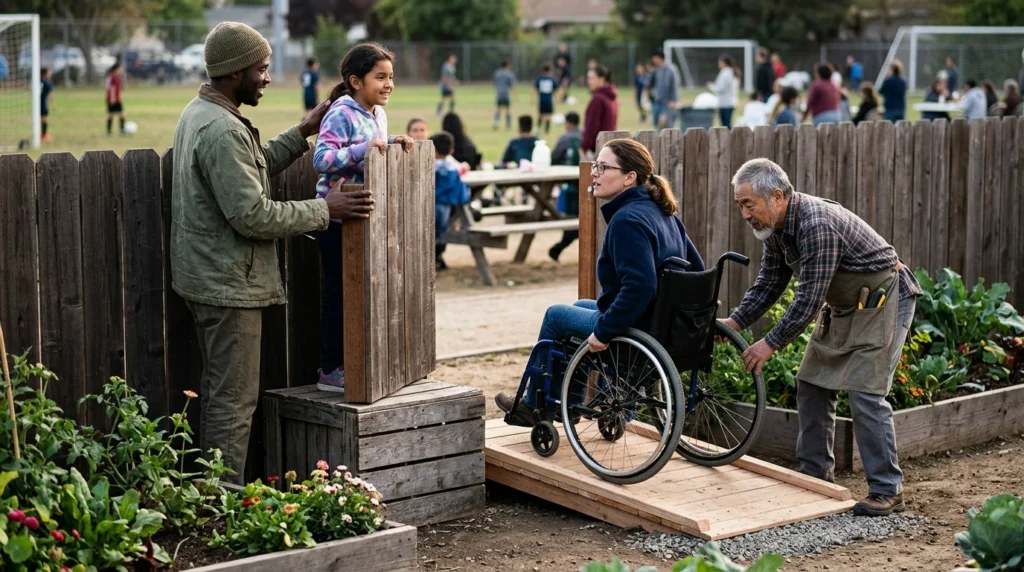
What Is Social Justice?
First, let us understand the term “social justice.”
Social justice is the idea that every person deserves equal rights and opportunities. It means that no one should be treated unfairly because of their race, gender, religion, age, or any other characteristic.
Social justice is about fairness. It is about making sure everyone has access to the things they need to live a good life. Things like education, healthcare, housing, and employment.
Social justice is also about standing up for people who are treated unfairly. It is about speaking out against discrimination and inequality. It is about making the world a better place for everyone.
These are the experiences we describe with metaphors.
Why Do We Need Metaphors for Social Justice?
There are several important reasons to use metaphors for social justice.
First, metaphors are descriptive. They create strong images. Saying “we need equality” is clear. But saying “we need to level the playing field” creates a much more powerful picture.
Second, metaphors are emotional. They show how injustice makes you feel. Are you angry? Are you hopeful? Are you determined? The metaphor you choose can show all of these emotions.
Third, metaphors are unifying. They bring people together. A powerful metaphor can inspire people to fight for a common cause.
Fourth, metaphors make your English more natural. Native speakers use metaphors constantly. Learning them helps you sound fluent.
Finally, metaphors can be empowering. When you describe social justice with a powerful metaphor, it gives people hope. It motivates them to take action.
The Most Common Metaphors for Social Justice
Here are the most popular metaphors native speakers use. Each one has a slightly different meaning.
A Level Playing Field
This is one of the most common metaphors for fairness.
Meaning: A situation where everyone has the same opportunities.
Example:
“We need to create a level playing field for all students.”
When to use: Use this for fairness and equal opportunity.
A Rising Tide Lifts All Boats
This metaphor describes how justice helps everyone.
Meaning: When things get better for everyone, everyone benefits.
Example:
“A rising tide lifts all boats. Justice for one is justice for all.”
When to use: Use this for the idea that equality helps everyone.
A Long Arc Bending Toward Justice
This metaphor describes the slow progress of justice.
Meaning: Justice may be slow, but it is always moving forward.
Example:
“The arc of the moral universe is long, but it bends toward justice.”
When to use: Use this for hope and persistence.
A Beacon of Hope
This metaphor describes justice as a guiding light.
Meaning: A symbol of hope and progress for people.
Example:
“The civil rights movement was a beacon of hope.”
When to use: Use this for inspiring movements.
A Bridge to Equality
This metaphor describes justice as connecting people.
Meaning: A path that connects people to equality and fairness.
Example:
“Education is a bridge to equality.”
When to use: Use this for paths to justice.
A Shield for the Vulnerable
This metaphor describes justice as protection.
Meaning: Something that protects people who are weak or vulnerable.
Example:
“The law should be a shield for the vulnerable.”
When to use: Use this for protection and safety.
A Voice for the Voiceless
This metaphor describes speaking up for others.
Meaning: Speaking on behalf of people who cannot speak for themselves.
Example:
“Activists are a voice for the voiceless.”
When to use: Use this for advocacy and speaking up.
A Light in the Darkness
This metaphor describes justice as hope in hard times.
Meaning: Hope and guidance in difficult times.
Example:
“Her activism was a light in the darkness.”
When to use: Use this for hope and inspiration.
A Foundation of Society
This metaphor describes justice as the base of society.
Meaning: The basic structure that holds society together.
Example:
“Justice is the foundation of a healthy society.”
When to use: Use this for the importance of justice.
A Garden of Equality
This metaphor describes justice as something that grows.
Meaning: A place where equality grows and flourishes.
Example:
“We are planting a garden of equality.”
When to use: Use this for growth and nurturing justice.
A Mountain to Climb
This metaphor describes the difficulty of achieving justice.
Meaning: A difficult but achievable challenge.
Example:
“Achieving social justice is a mountain to climb.”
When to use: Use this for the struggle for justice.
A River of Change
This metaphor describes justice as a flowing force.
Meaning: A powerful, unstoppable force of change.
Example:
“The movement was a river of change.”
When to use: Use this for powerful movements.
A Pillar of Strength
This metaphor describes justice as something strong.
Meaning: A strong, supporting force.
Example:
“The activists were pillars of strength.”
When to use: Use this for strong advocates.
A Seed of Hope
This metaphor describes justice as something small but powerful.
Meaning: A small beginning that can grow into something big.
Example:
“Every act of kindness is a seed of hope.”
When to use: Use this for small acts of justice.
A Tapestry of Diversity
This metaphor describes justice as weaving people together.
Meaning: A beautiful fabric made of many different threads.
Example:
“Our society is a tapestry of diversity.”
When to use: Use this for diversity and inclusion.
A Flame of Justice
This metaphor describes justice as a burning fire.
Meaning: A powerful, passionate force for change.
Example:
“The flame of justice burns bright in their hearts.”
When to use: Use this for passion and determination.
A Path to Freedom
This metaphor describes justice as a journey.
Meaning: A journey toward freedom and equality.
Example:
“The march was a path to freedom.”
When to use: Use this for journeys toward justice.
A Wall of Solidarity
This metaphor describes justice as unity.
Meaning: A wall of people standing together for justice.
Example:
“The protesters formed a wall of solidarity.”
When to use: Use this for unity and standing together.
A Symphony of Voices
This metaphor describes many people speaking together.
Meaning: Many different voices coming together in harmony.
Example:
“The rally was a symphony of voices.”
When to use: Use this for collective action.
A Window of Opportunity
This metaphor describes a chance for change.
Meaning: A brief chance to make progress.
Example:
“This is a window of opportunity for change.”
When to use: Use this for moments of change.
A Chain of Change
This metaphor describes change as connected events.
Meaning: A series of connected events that create change.
Example:
“Each small action is a chain of change.”
When to use: Use this for connected efforts.
A Circle of Inclusion
This metaphor describes a community that includes everyone.
Meaning: A community where everyone is included.
Example:
“We are building a circle of inclusion.”
When to use: Use this for inclusion and belonging.
Complete Comparison Table of Metaphors for Social Justice
| Metaphor | Meaning | Example Sentence |
|---|---|---|
| A Level Playing Field | A fair situation with equal opportunity | We need a level playing field. |
| A Rising Tide Lifts All Boats | Justice helps everyone | A rising tide lifts all boats. |
| A Long Arc Bending Toward Justice | Slow but steady progress toward justice | The arc bends toward justice. |
| A Beacon of Hope | A symbol of hope and progress | The movement was a beacon of hope. |
| A Bridge to Equality | A path to fairness and equality | Education is a bridge to equality. |
| A Shield for the Vulnerable | Protection for weak and vulnerable people | The law is a shield for the vulnerable. |
| A Voice for the Voiceless | Speaking for those who cannot speak | Activists are a voice for the voiceless. |
| A Light in the Darkness | Hope and guidance in hard times | Her activism was a light in the darkness. |
| A Foundation of Society | The base that holds society together | Justice is the foundation of society. |
| A Garden of Equality | A place where equality grows | We are planting a garden of equality. |
| A Mountain to Climb | A difficult but achievable challenge | Social justice is a mountain to climb. |
| A River of Change | A powerful, unstoppable force for change | The movement was a river of change. |
| A Pillar of Strength | A strong, supporting force | Activists are pillars of strength. |
| A Seed of Hope | A small beginning that grows | Kindness is a seed of hope. |
| A Tapestry of Diversity | Many different threads woven together | Society is a tapestry of diversity. |
| A Flame of Justice | A powerful, passionate force for change | The flame of justice burns bright. |
| A Path to Freedom | A journey toward freedom and equality | The march was a path to freedom. |
| A Wall of Solidarity | People standing together for justice | They formed a wall of solidarity. |
| A Symphony of Voices | Many voices coming together in harmony | The rally was a symphony of voices. |
| A Window of Opportunity | A brief chance for change | This is a window of opportunity. |
| A Chain of Change | Connected events that create change | Each action is a chain of change. |
| A Circle of Inclusion | A community where everyone is included | We are building a circle of inclusion. |
Real-Life Examples (7 Conversations)
Let us see these metaphors in action. These are realistic conversations.
Example 1: A Discussion About Education
Person A: “Why is education so important for social justice?”
Person B: “Because education is a bridge to equality.”
Person A: “How so?”
Person B: “It gives everyone a level playing field. Every child deserves the same chance.”
Lesson: Education is a path to equality.
Example 2: A Civil Rights Rally
Person A: “I am so inspired by this rally.”
Person B: “Me too. The people are a symphony of voices.”
Person A: “They are a wall of solidarity.”
Person B: “This movement is a light in the darkness for so many.”
Lesson: Protests bring people together for justice.
Example 3: A Conversation About Activism
Person A: “Why do you do this work?”
Person B: “I want to be a voice for the voiceless.”
Person A: “That is beautiful.”
Person B: “Justice is the foundation of society. Without it, everything falls apart.”
Lesson: Activists speak up for others.
Example 4: A Discussion About Progress
Person A: “Do you think we will ever have true equality?”
Person B: “Yes. The arc of the moral universe is long, but it bends toward justice.”
Person A: “It is a mountain to climb.”
Person B: “But it is a mountain worth climbing.”
Lesson: Progress is slow but possible.
Example 5: A Community Project
Person A: “What are you working on?”
Person B: “We are building a garden of equality in our community.”
Person A: “That sounds wonderful.”
Person B: “Every small action is a seed of hope.”
Lesson: Community projects build justice.
Example 6: A Business Discussion
Person A: “Why is diversity important in the workplace?”
Person B: “Because a rising tide lifts all boats. When everyone succeeds, we all succeed.”
Person A: “So we need a level playing field.”
Person B: “Exactly. Inclusion benefits everyone.”
Lesson: Diversity and inclusion benefit everyone.
Example 7: A Political Conversation
Person A: “How do we create change?”
Person B: “We need to be a river of change.”
Person A: “What does that mean?”
Person B: “We need to be unstoppable. We need to keep moving forward.”
Lesson: Change requires persistent effort.
When Should You Use These Metaphor for Social Justice?
You can use these metaphors in many situations.
In Activism and Advocacy
When you are talking about activism, these metaphors help describe the struggle and hope.
Example:
“We are a voice for the voiceless. Together, we are a wall of solidarity.”
In Education
When you are teaching about social justice, these metaphors help explain the concepts.
Example:
“Education is a bridge to equality. It gives everyone a level playing field.”
In Writing
These metaphors make your writing more powerful and inspiring.
Example:
“The flame of justice burns bright in the hearts of those who fight for equality.”
In Speeches
These metaphors are powerful in speeches. They inspire and unite people.
Example:
“We are building a circle of inclusion. Everyone is welcome. Everyone belongs.”
In Everyday Conversation
You can use any of these metaphors in daily life. They make your English more meaningful.
Example:
“Every act of kindness is a seed of hope for a better world.”
Common Mistakes to Avoid
Now let us look at some common errors.
Mistake 1: Using the Wrong Intensity
Incorrect:
“I shared my lunch. I am a beacon of hope.”
Correct:
“I shared my lunch. It was a kind gesture.”
Explanation: Use strong metaphors for big movements, not small gestures.
Mistake 2: Taking Metaphors Literally
Incorrect:
“Is there really a bridge?”
Correct:
“No, it is just a metaphor.”
Explanation: Remember, these are figures of speech.
Mistake 3: Overusing Metaphors
Incorrect:
“It is a beacon of hope, a light in the darkness, and a bridge to equality all at once.”
Correct:
“It is a beacon of hope.”
Explanation: One powerful metaphor is better than many.
Mistake 4: Using Metaphors Casually
Incorrect:
“I got a promotion. A rising tide lifts all boats.”
Correct:
“I got a promotion. I am very happy.”
Explanation: Use these metaphors for important social issues, not personal gains.
Mistake 5: Using Metaphors Without Understanding
Incorrect:
“The arc bends toward justice.” (Used casually without understanding the meaning)
Correct:
“The arc of history bends toward justice.” (Used with understanding)
Explanation: Understand the metaphor before you use it.
Quick Memory Trick
Think of a field. A level playing field is fair for everyone. Justice is about creating a level playing field.
Now think of a bridge. A bridge connects two sides. Justice is about building a bridge to equality.
Now think of a flame. A flame burns bright and hot. Justice is about keeping the flame of justice alive.
Finally, think of a tapestry. A tapestry is made of many threads. Justice is about creating a tapestry of diversity.
Use these images to remember the metaphors.
Practice Quiz (Interactive Section)
Test your knowledge. Choose the correct metaphor for each sentence.
Question 1:
“We need to create fairness for everyone. We need _____.”
A) A level playing field
B) A beacon of hope
C) A flame of justice
Answer: A) A level playing field.
Question 2:
“Justice is moving forward. It may be slow, but _____.”
A) The arc bends toward justice
B) A rising tide lifts all boats
C) It is a mountain to climb
Answer: A) The arc bends toward justice.
Question 3:
“Activists speak for people who cannot speak. They are _____.”
A) A voice for the voiceless
B) A wall of solidarity
C) A symphony of voices
Answer: A) A voice for the voiceless.
Question 4:
“Diversity makes society beautiful. We are _____.”
A) A tapestry of diversity
B) A bridge to equality
C) A garden of equality
Answer: A) A tapestry of diversity.
Question 5:
“People standing together are powerful. They form _____.”
A) A wall of solidarity
B) A river of change
C) A window of opportunity
Answer: A) A wall of solidarity.